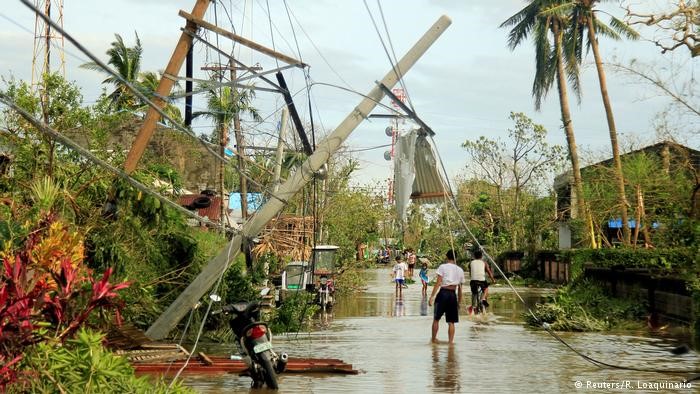
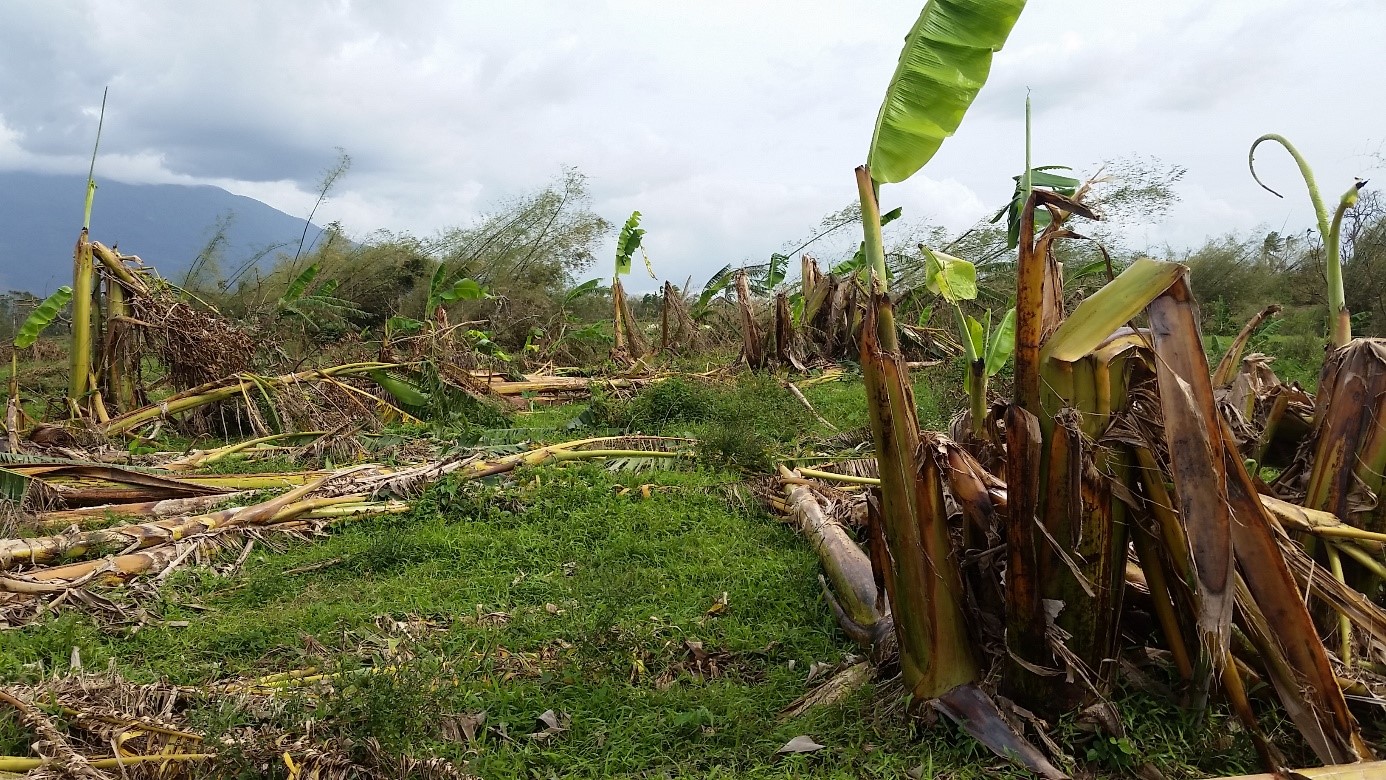
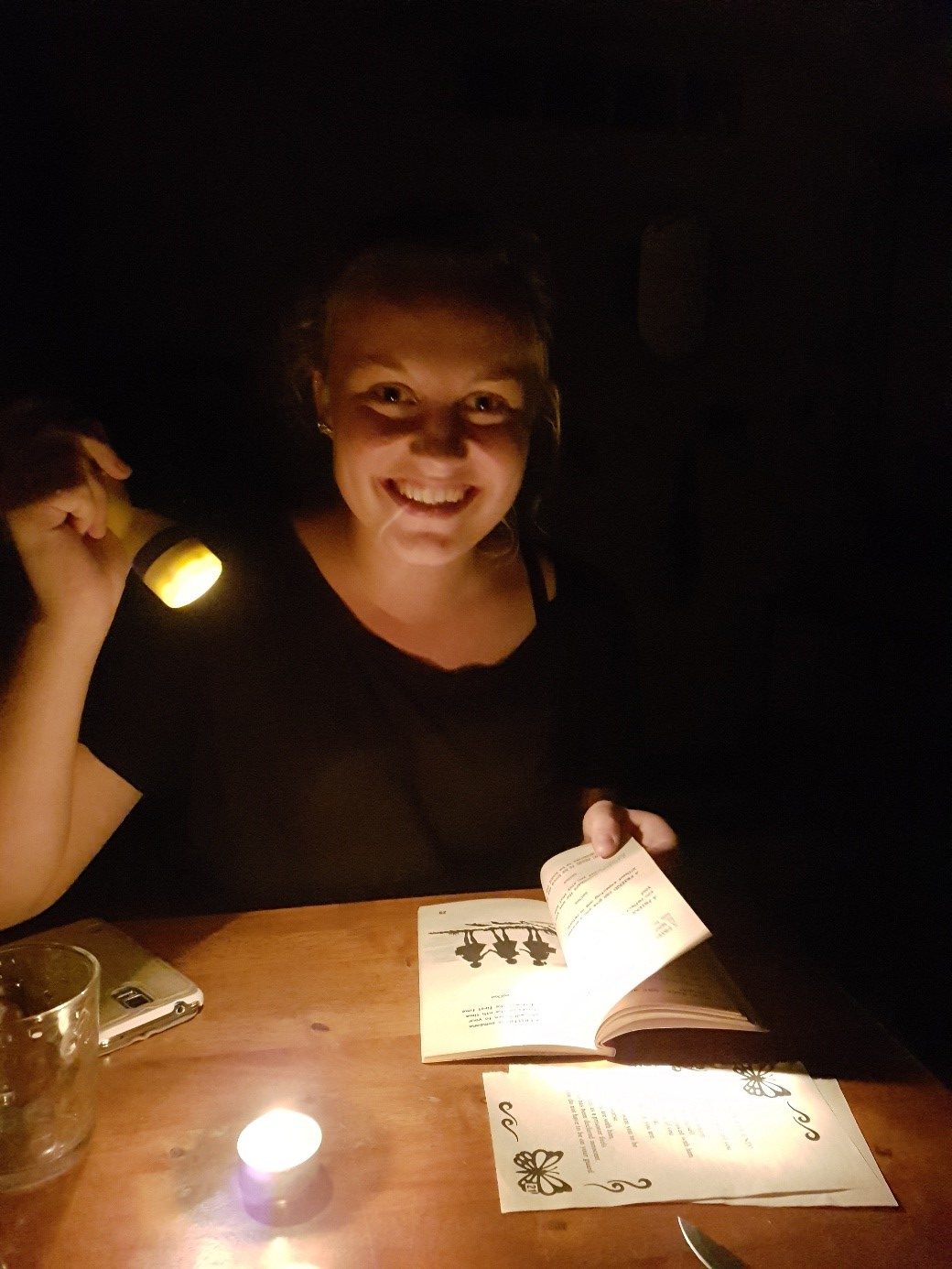
Von sogenannten Taifunen hört man meist nur in den Medien und kann sich selbst gar nicht vorstellen wie schlimm eine solche Naturkatastrophe ist. Auf den Philippinen kann es jährlich zu bis zu 20 Taifunen kommen, was an der Lage des Insel Archipels liegt, da wir hier mitten im „Ring of fire“ sind. Als kleines Weihnachtsgeschenk hat die Natur uns also den Taifun Nina oder Nock-Ten mit Stärke 4 von 5 geschenkt. Mit einer Geschwindigkeit von fast 300 km pro Stunde hat Nina nicht nur Bäume aus der Erde gerissen, sondern auch Strommasten und dadurch dafür gesorgt, dass die Leute in 5 Provincen hier 2 bis 4 Wochen keinen Strom hatten.
Da solch eine Situation für die Filipinos aber leider schon zum Alltag dazu gehört, hieß es in unsrem Fall das Beste draus machen…
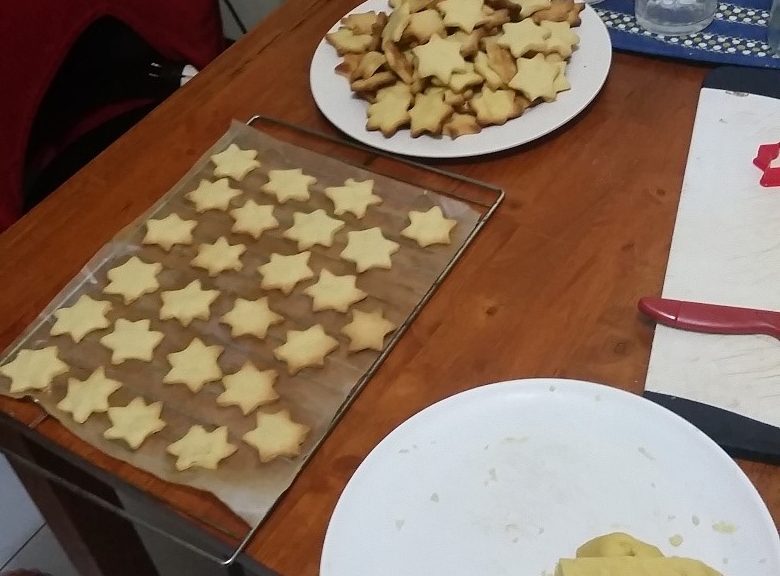
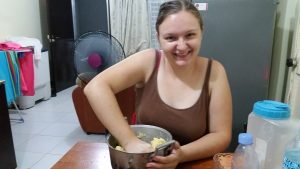
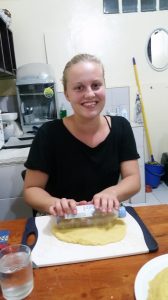
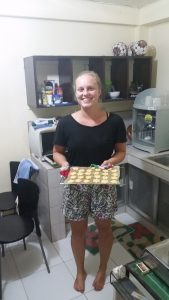
Um eine richtige Weihnachtsstimmung zu bekommen, dürfen natürlich die Plätzchen nicht fehlen! Um auch dieses Jahr nicht darauf verzichten zu müssen, haben wir bei einer angenehmen Außentemperatur von circa 30 Grad angefangen einfache Butterplätzchen zu backen. Ob das die beste Idee war lässt sich schwer sagen, denn jeder weiß wohl was passiert, wenn es warm ist und man Butter verwendet. Der Teig wurde also von Hand geknetet und da wir natürlich kein Nudelholz hatten, haben wir improvisiert und eine Flasche zur Hilfe genommen.
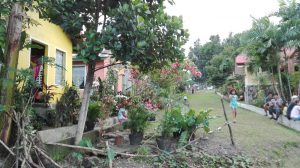
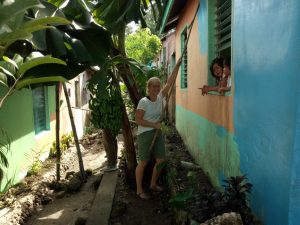
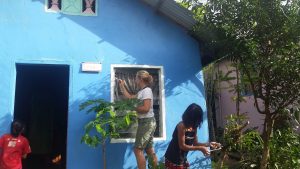
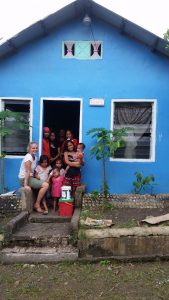
Früh am Morgen sind wir heute aufgebrochen und nach Libmanan gefahren, was eine Stunde entfernt von Naga liegt. Dort befindet sich ein wirklich spannendes Projekt, eine Dorf das für Leute eröffnet wurde mit Schicksälen wie zum Beispiel Naturkatastrophen. In diesem Dorf stehen 40 kleine aber feine Häuser die mit Hilfe von Sponsoren errichtet wurden. Das ganze Projekt nennt sich Gawad Kalinga (kurz GK) und hat über 30 Einsatzplätze in den Philippinen! Es ermöglicht Familien dort zu leben, ein Teil der Gemeinschaft zu werden und vor allem eine Zukunft für ihre Kinder zu schaffen!
Das Dorf wurde vor 11 Jahren errichtet und die Häuser wurden damals auch das letzte Mal gestrichen. Unsere Aufgabe an diesem Tag war also die Häuser wieder in Schwung zu bekommen und ihnen einen neuen Anstrich zu verpassen. Wir waren also den ganzen Tag mit streichen beschäftigt und haben dabei viele neue Leute kennengelernt und außerdem. In jedem Haus lebt eine andere Familie die eine Geschichte zu erzählen hatte, was die Sache umso interessanter gemacht hat!
Due to the fact that we live in Ateneo de Manila, which is on Katipunan Avenue, there is heavy traffic every day. Heavy traffic in the Philippines can not be compared with heavy traffic in Germany. Not only that the traffic rules are sometimes not very visible, but there is such a high amount of cars on the street that traffic jams are the rule not the exception.
To reach your destination with public transportation, as some people in the offices do, you have many opportunities to do so. But you have to say that people here sometimes have to get up at 5 a.m. to be at work at 8 a.m. when they ride public transportations, because of the traffic even when it would be a 15 minutes ride without traffic.
First, there is the LRT which is comparable with normal trains, so that there are stations for example one on Katipunan which drives in two directions. If you arrive in other areas for instance in Cubao, there are more trains you can take to reach more destinations. Compared to german prices, the LRT is way cheaper. You have to pay around 25 PHP (converted not even 50 ct at the moment) to go to the final destination. Upside of the LRT is the air condition in the trains, even if the effect of it is narrowed by the high quantity of people in it, and the speed, because there is no traffic on the rail tracks.
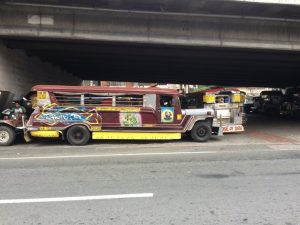
Another opportunity for people who do not fear the mixture of the heat outside and body heat of 20 people around you, there are jeepneys as well. The typical and popular transportation for the Philippines is again very cheap, so that you will pay 7 PHP for the shortest distance until 17 PHP if you really ride it around 1 hour. At the front glass pane they usually have a sign with their destination on it like ‘’fairview’’, ‘’LITEX’’ or ‘’UP’’, so you approximately know where they go. They don’t have exact stations or stops. Consequently, to enter a jeepney, you just have to lift your arm and they will stop. In the jeepney your payment will be consigned across it to the driver and if you want to leave, you just scream that you want to go out. Since you can not look the timetable or anything else up in the internet, foreigners are having a hard time to know where to go with which jeepney, therefore it would be necessary to drive the whole route with a Filipio once to know where to go out and enter.
To reach a short distance destination, one can also use motorized tricycles, in which – surprisingly – 5 or 6 passengers fit. By reason they always have their specific areas you can not use it like a cab. Of course you can say your destination, but if it is outside of their district they will not bring you there. For tall people like me, riding with 5 persons is sometimes uncomfortable since you do not have any space for your legs, but this kind of transportation is cheap (depending on your destination and if they want to take advantage of foreigners between 8 – 50 PHP) and relatively fast as well, because the small tricycles are having a better chance in a traffic jam drive ahead.
A bit more comfortable are the buses with air condition and around 20 PHP or more for one ride. Of course they do not have stations as well and do not drive in the outer districts but in the huge roads like Katipunan or Commonwealth. Pretty similar to this, there are vans – a mixture of cab and bus – which one can use. As well as the others, they do not have stations and just drive the same route over and over again.
If people want to spend more money on more comfortable transportation, there is the opportunity to take a cab – which is the most expensive one – or to take an uber or grab, which is not that expensive. The prices for cabs in general are still not that expensive like they are in Germany, but in comparison to other public transportations it is expensive nevertheless.
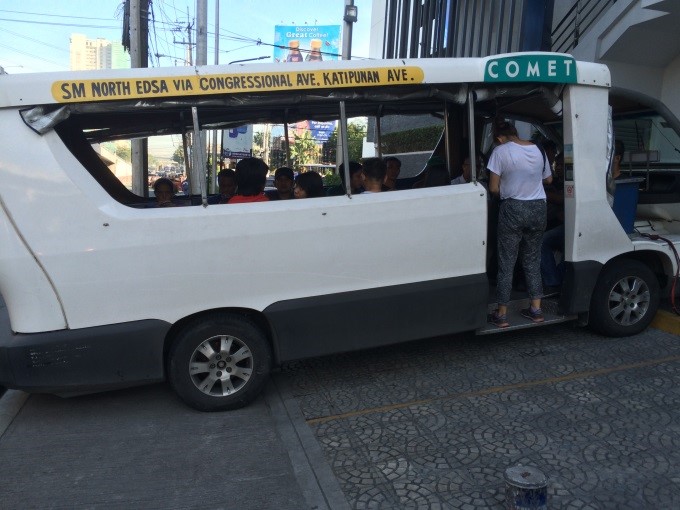
Unfortunately, the air pollution especially in tight populated areas is extremely high, because of the huge amount of cars and old facilities of the public transportations like jeepneys. However there are rudiments of sustainability seen in the city. For example the ‘’Comet’’, which is an electric jeep and a first step to a sustainable development.
In conclusion, on the Philippines, more precisely in Manila, there are way more opportunities of public transportation than there are in Germany. Also in comparison it is much cheaper to reach your destination here, even if it is most of the times not that comfortable. This is mostly reasoned by the heavy traffic and the climate, which makes the long time sitting in public transportation even more exhausting.
The public short-distance traffic in the Philippines is way different than it is in Germany or in other European countries. Here in Manila you have much more opportunities if you want to use the public transport system. You can take jeepney (or in short just “jeep”), a tricycle, sometimes a bicycle or of course a train, a bus or a cab.
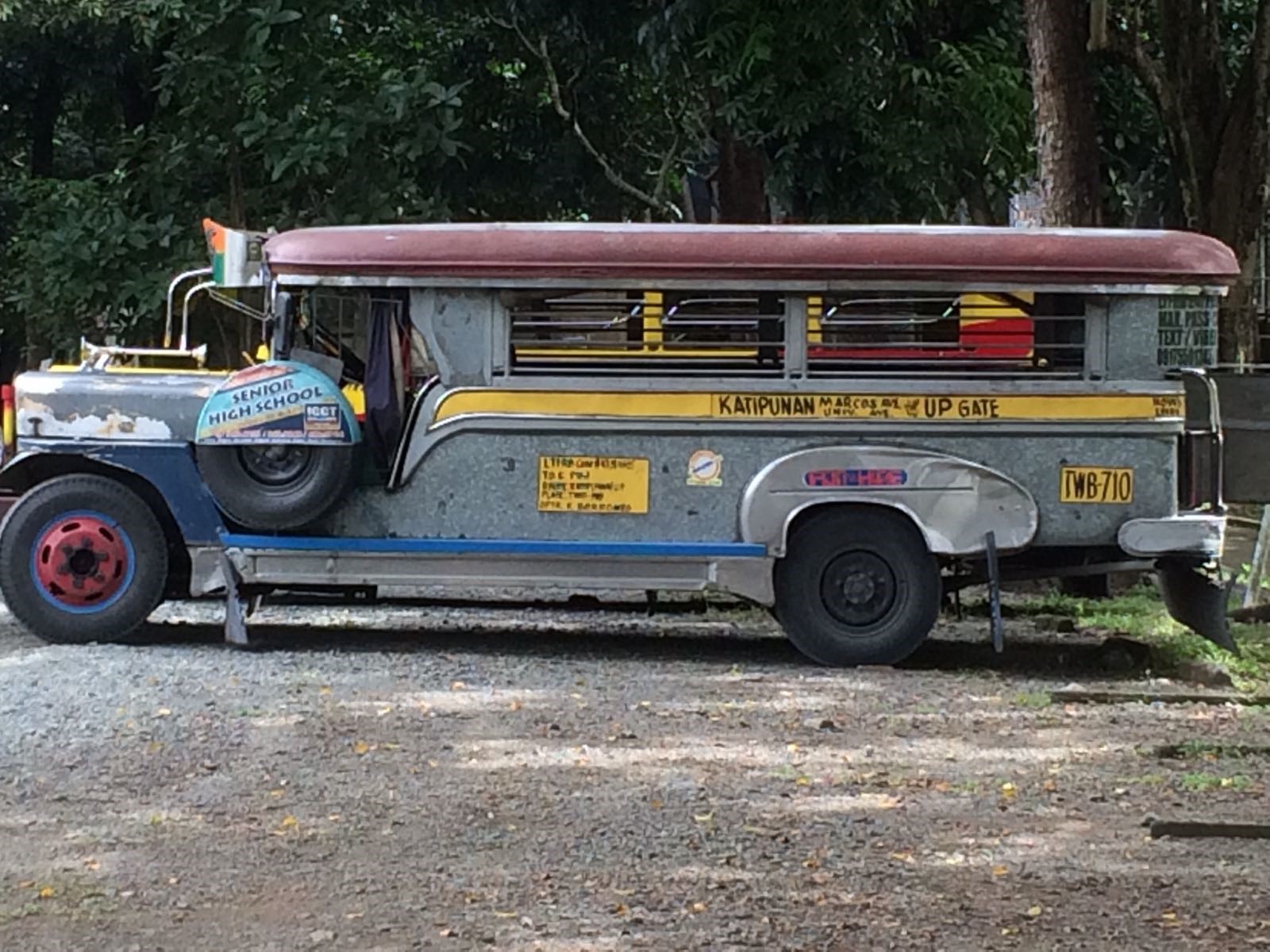
Jeepneys have been traditional Willys-Jeeps, left by the Americans. Now they are one of the most common and also the cheapest form of public transport. Today the Filipinos rebuilt these trucks on their own but the technology is still is not the best. That’s why they are very noisy and often blamed as one of the major sources of air pollution in big cities. The Jeeps always ride the same route like a bus but they don’t have stops. They pick you up and drop you off wherever you want, along this specific route the jeep uses. If you want to ride one you just have to wait next to the street until a jeep, which goes into the direction you want to go, passes by. (They have small signs which say where they will go.) Then you have to wave the driver and if he thinks that there is room left for another person he will stop and you can climb in. You can pay whenever you want. Just shout “bayad po” which means “paying” and pass the money to the driver. If you want to get out of the Jeep you have to shout “para po” which means “stop” and the driver will stop so that you can go off. For Corinna and me the drop off is always the most difficult part because if the jeep is full (and the jeeps are almost every time full) it is so hard to see something trough the little windows, so we are always wondering if we have to go off already.
Since our fist ride I really admire the jeepney drivers. They have to handle so much things at one time. They have to drive trough Manila’s traffic, have to hear trough all the noises if someone wants to go off or wants to pay. Then they have to take the money and give the change and at the same time they have to have a look if someone on the street is waving them. For this difficult work, the drivers receive 10-40 Cents (6-17 Php) per passenger (depending on how long their ride is). If they own their jeep on their own, then they can keep everything but often they have to pay a daily rent to the person who owns the jeep.
A typical Jeepney
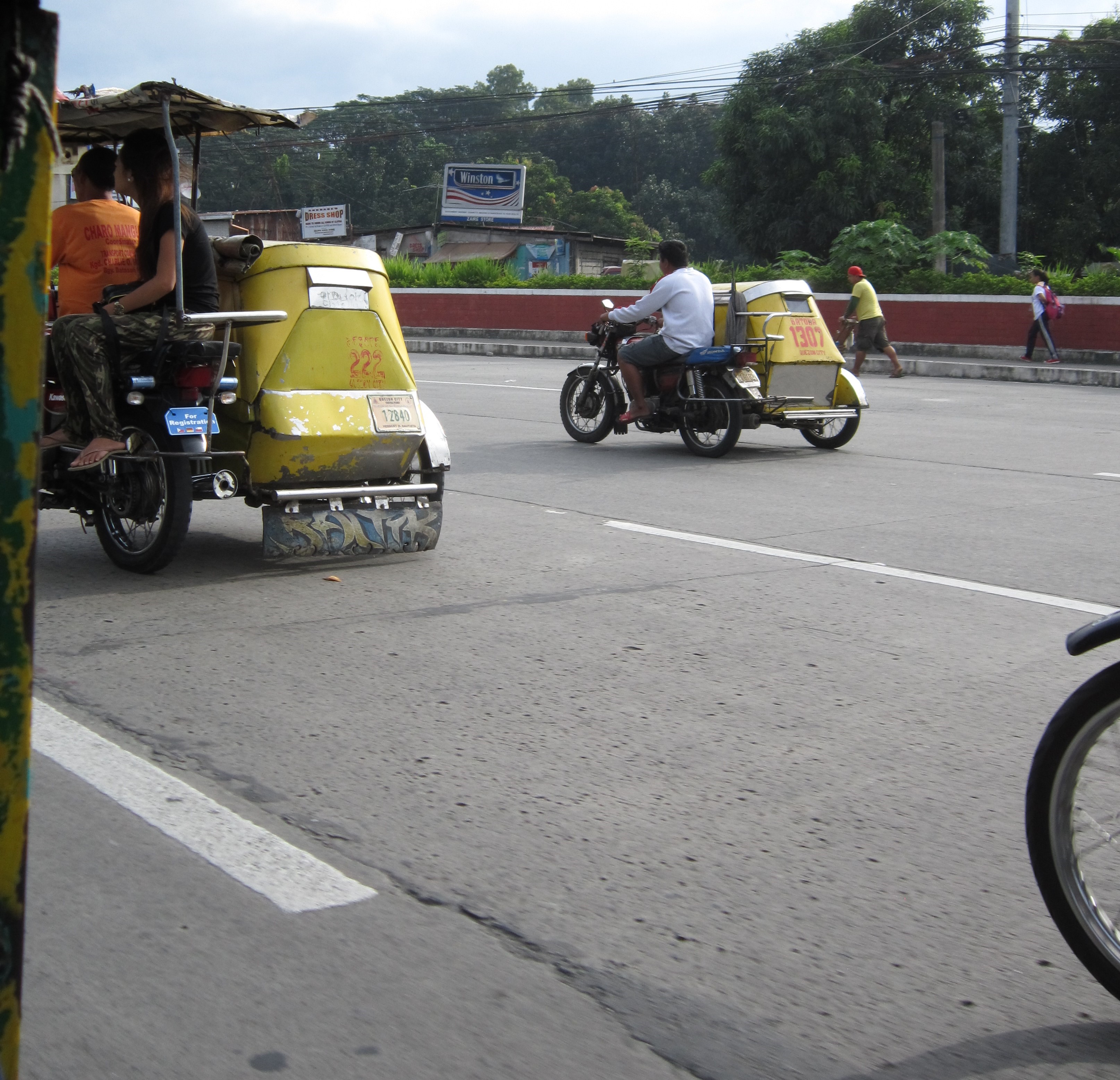
The second cheapest form of public transportation are the tricycles (or in short just “tric”). Tricycles are Motorbikes with small cabins next to them, in which passengers can be carried. They work almost like a taxi with the difference that they will not go out of a certain area (or only for a lot of money). Furthermore they are not allowed to use highways because they are to slow. If you want to ride one you can wait next to the street until an empty tric passes by or go to special tricycle terminals, where empty trics wait for passengers. But then the drivers usually wait until the tric is full, which means that there are three persons sitting in the small cabin and one or two are sitting behind the driver.
Picture of some trics taken out of one
In some areas there are also bicycles, which are tricycles with a bike instead of the motorbikes.
The big cities like Manila of course have also trains buses and cabs. They are pretty similar to the ones we know expect that everything is way cheaper. Last weekend we took a cab for about 20 minutes and paid together only 100 Pesos, which is round 2 €.
But what you don’t have here are good side walks. Sometimes there are no side walks at all, so you have to walk along the right side of the street. Often the side walks are blocked by parking cars or street vendors and very often the side walks are in a very bad condition with a lot of bumps and holes. In the beginning I asked myself the question: “Why does the government here doesn’t invest in building better side walks?” Maybe then people would walk more often, or take their bike and the horrible traffic could be reduced at least a little bit. The answer to this question is very easy. In the Philippines it is to hot to walk or bike outside. The temperature here usually never falls under 25 degrees. You can not go to work or to school by feet if you don’t want to arrive there completely soaked with sweat.
That and also the steady growing of the population in the cities leads to a lot of heavy traffic, which is a big problem here in Manila. During the rush hour in the morning and in the afternoon there are huge traffic jams every day. Since we arrived we met so many people, who need 1-2 hours to work just because of the traffic jams. That’s why on the one hand it is good that there is a huge variety of public transportation options but on the other hand the jeeps and trics, who always load and unload passengers at the side of the street make this problem even worse, as they then block the vehicles behind them. Another problem with the public transportation is, that even if there are so many public vehicles you can use, they aren’t enough. During the rush hour buses, trains and jeeps are so crowded that you often have to wait for the next one and in the tric terminals there are long queues. This problem causes that wealthy people, who don’t want to lose much time in traffic every day, have own cars with a driver so that they can use the time in traffic for sleeping or working. While having a driver in Germany is something only very very rich people can afford, here it is a lot more common. We met a lot of students, employees and even grad school pupils here in Ateneo, who have their own driver.
All in all you can say, that traffic in general is a big problem in the Philippines. The huge variety of public short-distance traffic options is a step in the right direction, to reduce the the traffic. But for working on the reduce of greenhouse gas emissions, the country should be more strict with the emissions of their public transportation vehicles (especially the jeeps and trics).
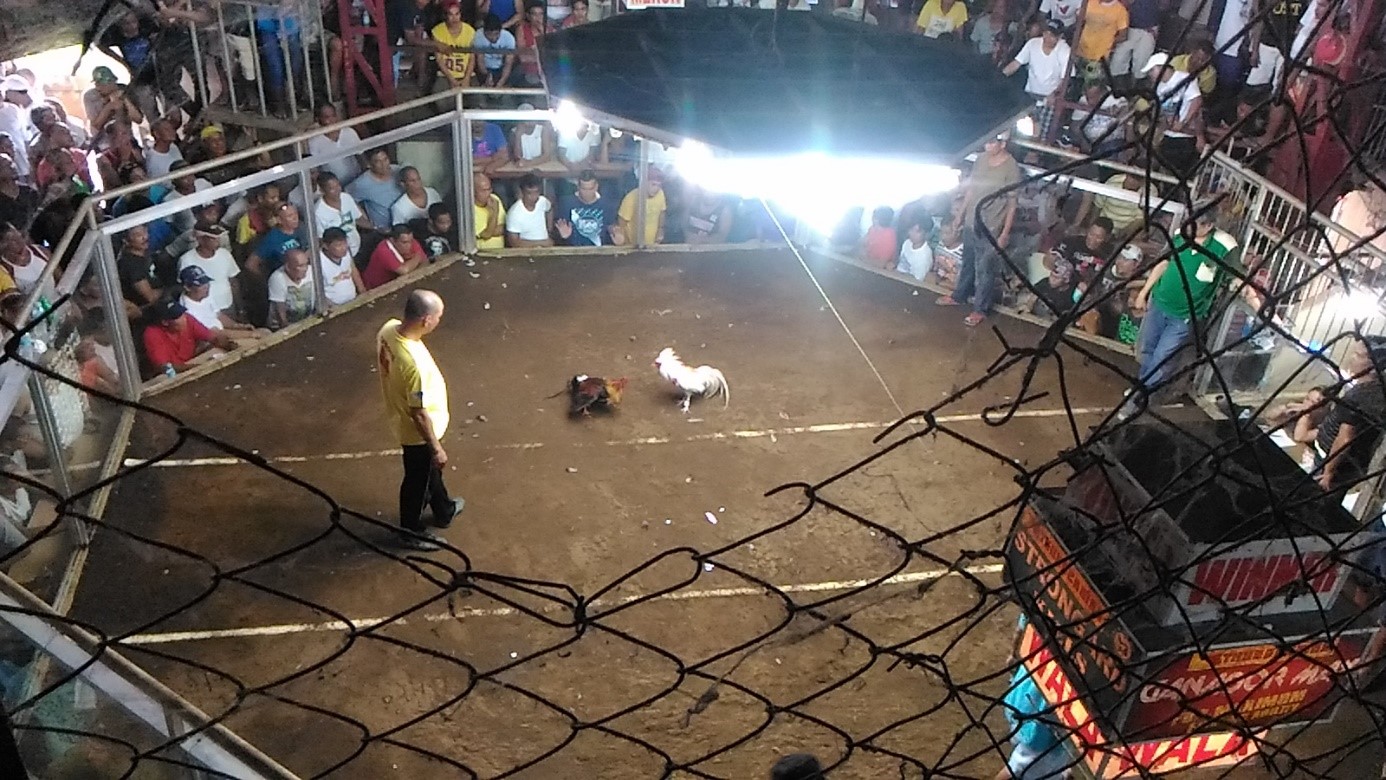
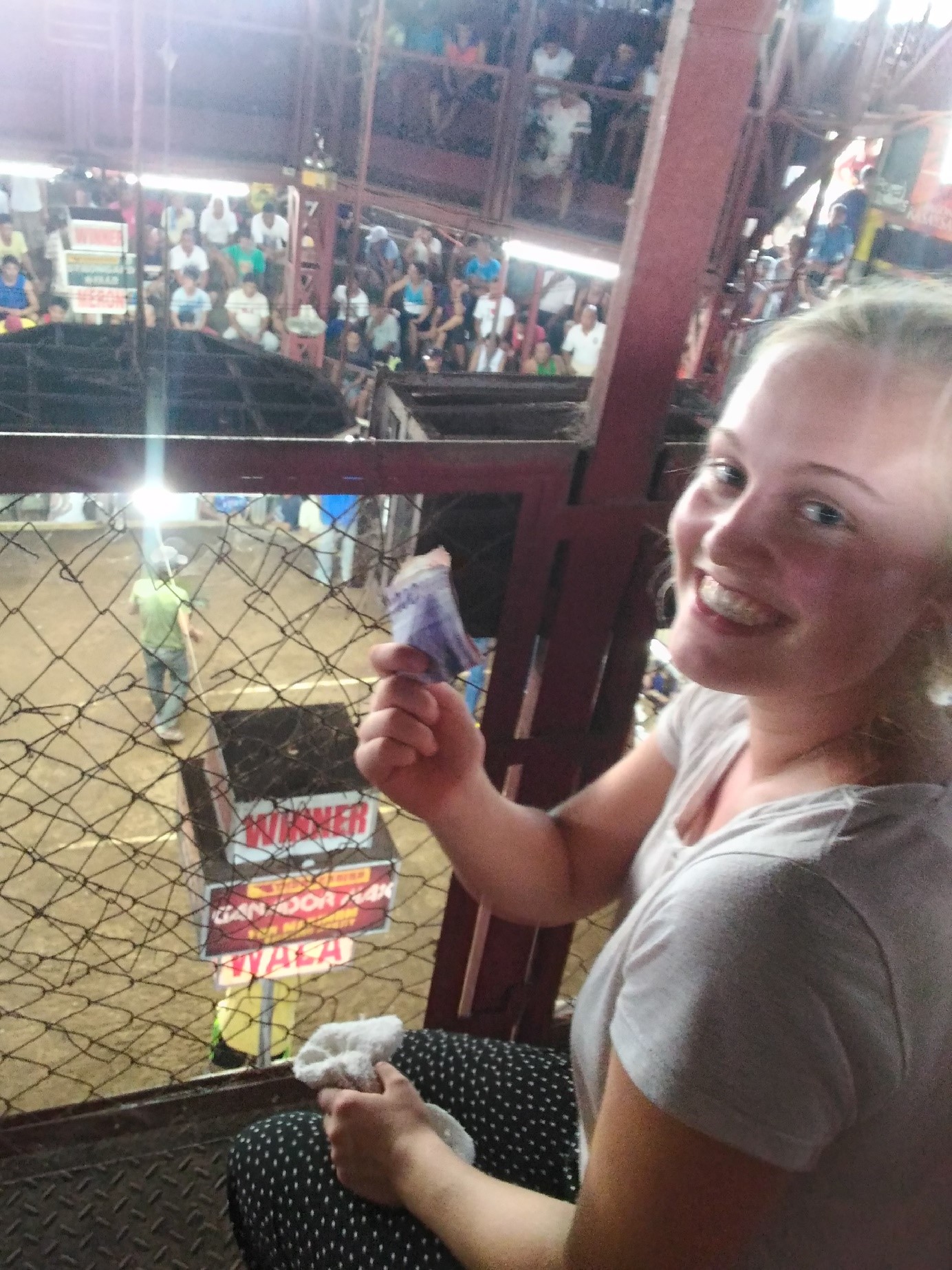
Was gehört zu einem typischen Sonntag dazu? Nicht etwa wie in Deutschland der Tatort, dieser wird hier durch den Hahnenkampf ersetzt. Der Hahnenkampf ist sehr bekannt auf den Philippinen und gehört zu den Traditionen des Landes. Das ist auch der Grand warum es nicht verboten ist, denn mal rein ethisch gesehen ist es nicht gerade das Beste für die Tiere. Jede größere Stadt hat mindestens eine Arena in die jeden Sonntag massenhaft Leute (99% Männer) strömen.
Etwas so Bekanntes darf man als Ausländer natürlich nicht verpassen, also sind wir an einem Sonntagnachmittag in die überfüllte, knall heiße Arena gegangen um zu sehen wie die ganze Sache abläuft! Natürlich geht es dabei auch vor allem ums Geld. Man kann beliebig viel Geld auf ein Tier setzten und dann eben je nach Verlauf des Kampfes eine Menge gewinnen oder verlieren. Da es sehr laut ist in der Arena kommunizieren die Leute nur über Handzeichen um die Summe des Geldes anzuzeigen, was wirklich faszinierend ist! Wir haben natürlich auch unser Glück versucht und sagenhafte 2,80 € gewonnen! Was für ein Erfolgserlebnis!
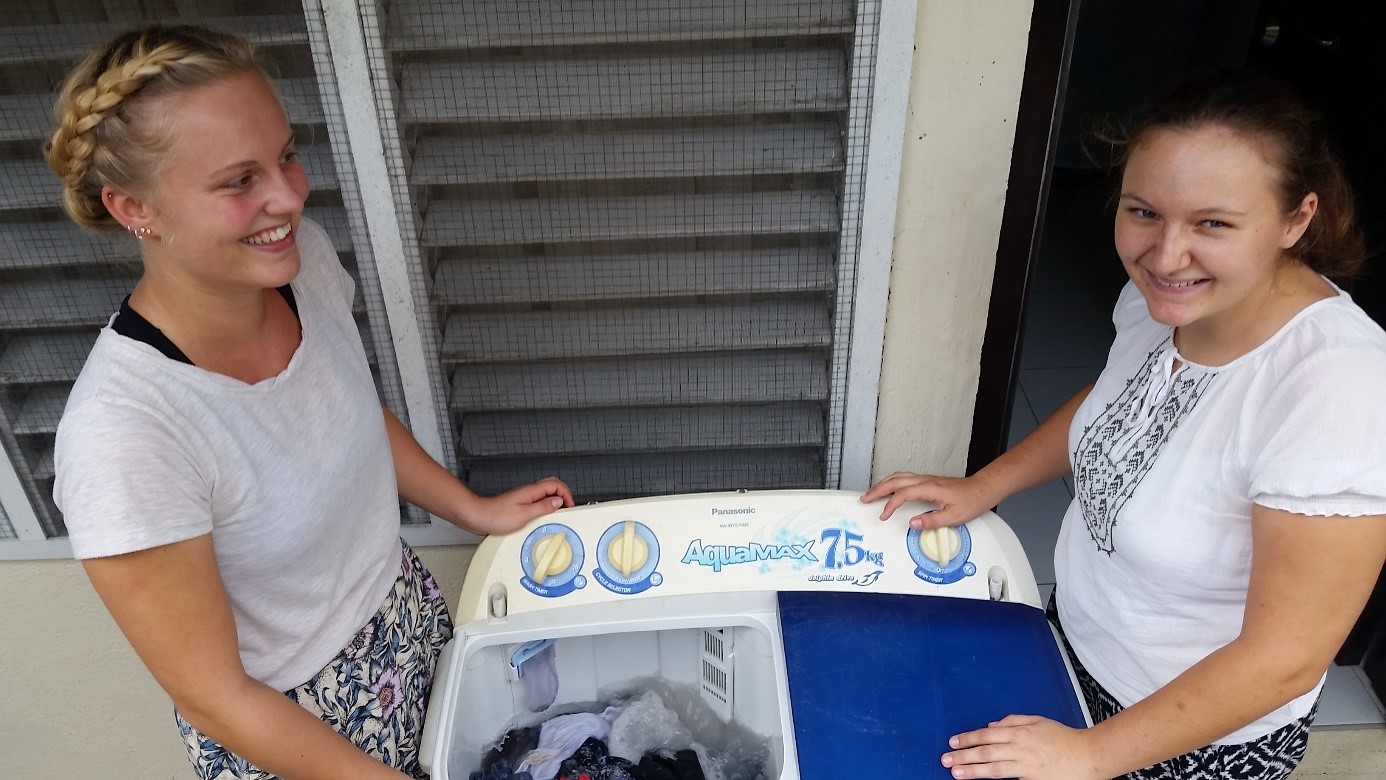
Wenn man mal vier Wochen seine Kleider von Hand gewaschen hat, kann man es als wirkliches Glücksgefühl bezeichnen, wenn man eine Waschmaschine hat!
Dass es keinen Wasseranschluss gibt und man daher das Wasser Eimer für Eimer einfüllen muss, ist daher wirklich nur noch ein Luxusproblem. So wird also der freie Sonntag zum Waschtag und wir haben wohl beide nicht gedacht, dass wir uns jemals so über saubere, gut riechende Kleidung freuen würden!
Nach unserer Rückkehr aus Anilao hatten wir letzten Mittwoch im Ateneo Center for Educational Development (ACED) das BMI Measurement Training mit Ryan Adalem, unserem Begleiter für die nächsten zwei Wochen in der MLQ und Fairview Elementary School, der uns an Hand einer PowerPoint Präsentation und einigen Selbstversuchen das Messen von BMI näher bringen wollte.
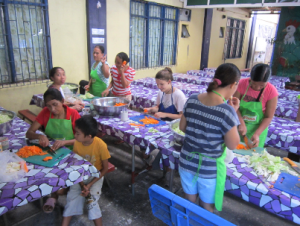
Für die Arbeit des feeding programs ist die Errechnung der BMIs der Kinder sehr wichtig, um Fortschritte in der Unterernährung der Kinder messen zu können. Daher sind wir die letzten Tage erst zur MLQ Elementary School gefahren, um beim Kochen der Mahlzeit zu helfen und haben im Anschluss daran mit Maßband und Waage die Größe und das Gewicht der Kinder aus dem feeding programm der Jahrgangsstufen 1-6 in MLQ, als auch in Fairview auszumessen.
In den nächsten zwei Wochen werden wir dasselbe mit der Elementary School aus Bagong Silangan unternehmen, in der wir bereits am Anfang in der Küche gearbeitet haben.
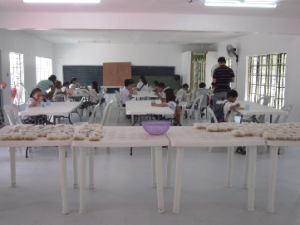
Einige Kinder der MLQ Elementary School beim EssenWährend des Messens der Größe mit Ryan
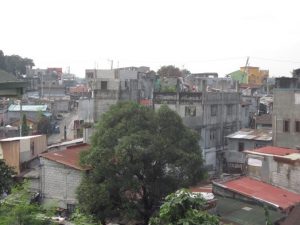
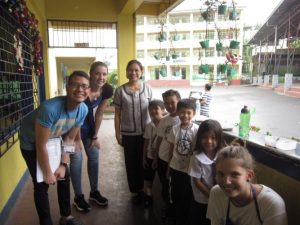
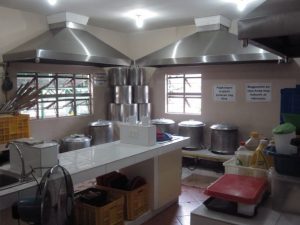
Die Umgebung der MLQ aus dem 4. StockwerkNach dem Messen mit Ryan, einer Lehrerin und einigen Kindern der SchuleDie Küche der MLQ Elementary School
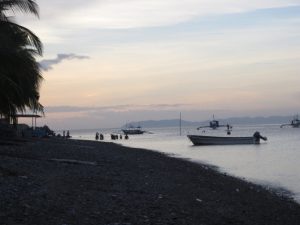
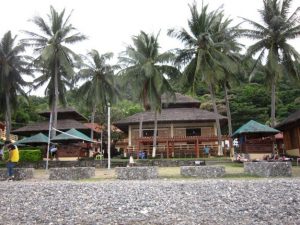
Da für uns Ende Oktober bis Anfang November ein langes Wochenende (von Samstag bis einschließlich Dienstag) anstand, planten wir einen Trip nach Anilao, eine Stadtgemeinde in Batangas. Begleitet wurden wir von Irene, der holländischen Stundentin, die im Ateneo Center of Sustainability ihr Praktikum macht und ebenfalls das lange Wochenende zum Reisen nutzen wollte. Vor Ort waren wir im Anilao Beach Club Resort untergebracht, welches direkt am Wasser lag.
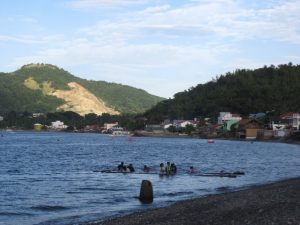
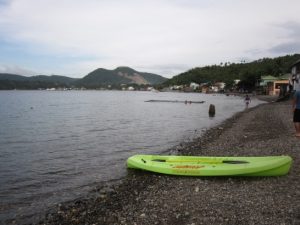
Nach dem Beziehen unserer kleinen, aber durchaus ausreichenden Casita, nutzten wir den Samstag um die gesamte Bucht mit dem Kayak zu erkunden und unser Abendessen in den kleinen Hütten direkt am Wasser zu genießen.
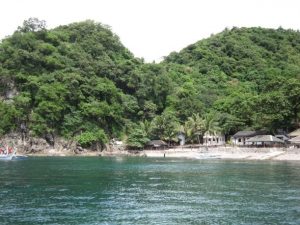
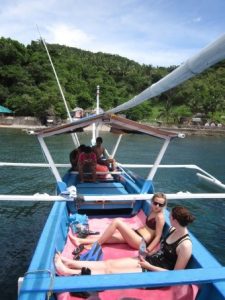
Am Sonntag buchten wir ein Boot des Resorts, welches uns zu einer nahegelegenen Tauchstelle brachte, wo wir einige Stunden bei bestem Wetter schnorchelten und einen Blick auf die Unterwasserwelt werfen konnten.
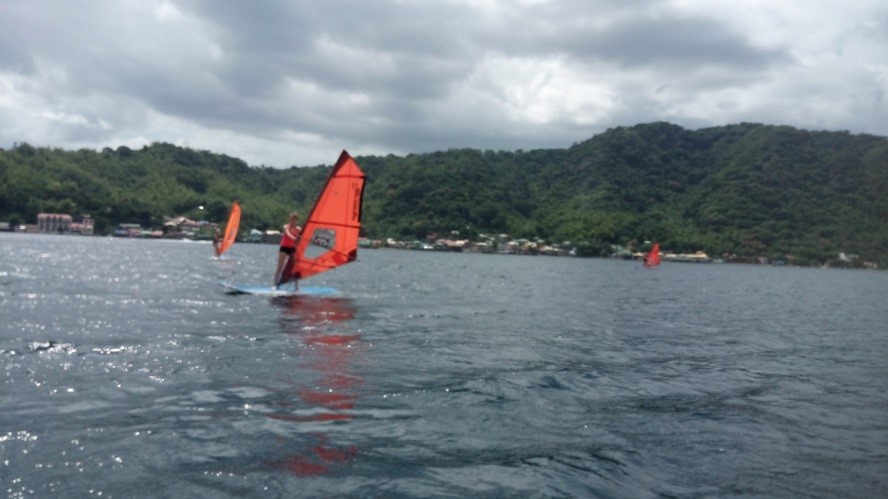
Im Anschluss daran stieg ich (Corinna) wieder ins Kayak und versuchte noch an anderen Stellen zu schnorcheln, während die anderen im Bereich vor dem Resort schnorchelten oder in der Sonne entspannten. Am Montag hieß es dann für alle zum ersten Mal windsurfen. Nach einigen Startschwierigkeiten konnten wir es aber genießen, auch wenn wir nach 3 Stunden völlig am Ende waren und deshalb den Rest des Tages nur in der Sonne lagen.
Am letzten Tag unseres Kurztrips spielten wir noch einige Runden Billard nach einem entspannten Frühstück und fuhren dann zurück nach Manila, wo wir auch – überraschenderweise – ohne viel Verkehr ankamen.
Our arrival, first impressions, orientation and our daily life
Our adventure here on the Philippines started with a very relaxed fist week at the campus of the Ateneo de Manila University. We weren’t allowed to leave the Campus at this time and got to know a lot of different people from many different offices, with which we will work together during our time here. Moreover the whole Campus (which includes a high school, a grade school, a college, many different offices, cafeterias and even a church -in short: it is very big) was shown to us and we got to know the main rules of campus life. For example that every morning the national anthem is played on the whole campus and as soon as you hear it you have to stand still. This rule counts for everybody and everything, so every morning from now to then every vehicle, every student who was jogging to his class a second before and everyone else stops and doesn’t move anymore until the national anthem is over.
In our second and third week we started working in the feeding program of ACED (=Ateneo Center for Educational Development). This program makes it possible that undernourished children get the chance to have a full meal at least once a day in school. Every morning we had to get up at 5am and then take jeepnys (jeepnys are vehicles, which are originally former US military jeeps, left over from world war one and today one of the most common forms of public transport in the Philippines) and tricycles to get to Bagong Silanan Elementary school in our first, and Cainta Elementary School in our second week. Both areas Cainta and Bagong Silanan are poorer parts of Metro Manila. There we cooked lunch for 6oo children together with other volunteers, mostly parents who have children at this schools. We helped with preparing vegetables and chicken, filling the food into the lunch boxes and cleaning up everything after the kids are gone.
Bagong Silanan Elementary SchoolCainta Elementary School
Besides cooking, one of our tasks during the feeding program is to interact with the children, check their names and convince them to finish their meal, because they often don’t like vegetables and therefore refuse to eat them. While checking the names of the children we recognized that many filipino parents love to give their children special names. There were kinds who had Julius Caesar, John Lennon, King James or Kurt Cobain as their first name. Later this day we asked a member of the ACED office and found out that it is a common thing to give your kids such names.
While working in the kitchen we had a lot of time to talk to the parents who worked with us. Sometimes we had some struggles with understanding each other because English is their second language as well but all in all it worked. We asked them why some children who are in the feeding program don’t come and they told us that it doesn’t matter if the children go to school or stay at home. So sometimes the kids stay at home because they have to help their parents and sometimes especially after a Taifun it is difficult to get to school because of the floodings and the traffic. Then it would take too long to get there, so they rather stay at home.
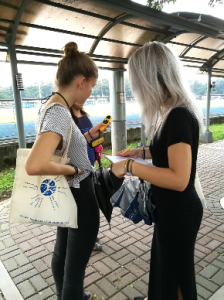
In our fourth week we worked on Campus in the AIS (Ateneo Institute of Sustainability). There we had to collect data for a campus microclimate profiling project. Four times a day we had to walk a specific route across the campus and measure the air temperature, the current wind speed, the relative humidity, the barometric pressure and the heat stress index at several stops. Afterward we typed the date in an exel file and analyzed it.
Working on the microclimate profiling
One of my first impressions in general was the very hot and humid climate which makes everything so exhausting. At our fist campus tour we walked about 15 minutes outside and back in our dorm it felt like a marathon. Afterwards the supervisor of our dorm told us that right now the weather is „cold“ because it is rainy season at the moment and that it will be way worse in February.
Another impressive experience in our fist days working outside the campus was, that we as white foreigners attract a lot of attention (especially in the poorer areas). Some people on the street turned heads when they saw us, the children, who nearly never see foreigners in ‚real life‘ sometimes can’t stop looking at us and even a few teachers came just to take pictures with us. At the same time we were sometimes treated very respectfully. For example at one of our first days when we were on our way to Bagong Silanan we walked along the sidewalk and there were two women standing in front of us, talking to each other. One of them saw us and pulled the other one to the side so that we have enough space to pass by. Then they started whispering and looked amazed at us. That was such a strange situation and I felt a bit insecure.
But normally the people we meet are very very friendly and kind, the parents and teachers in the schools as well as the people from Ateneo. We were invited for lunch or dinner so often, the parents brought traditional filipino finger food to the kitchens and we were taken to different places in Manila on the weekends by students or members of the different offices here.
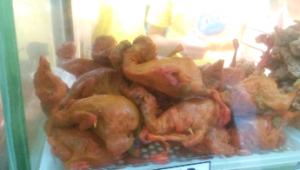
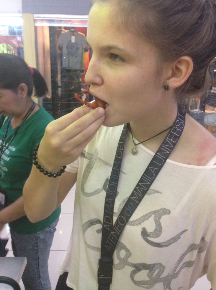
Furthermore we tried as many different typical Filipino dishes as possible in our first few weeks. One of the most exotic snacks we had, are the so called ‚one day old chicks‘. These small one day old chicks are eaten butter-fried together with a vinegar or sweet chili dip. I was surprised how delicious they are if you force yourself to not think about what you are eating. It just tastes like a crunchy piece of fried chicken meat.
One day old chicks
Another experience was eating Filipino spaghetti because they are sweet. Before, I could not imagine that this is possible but it is. Filipinos like sweet food at all that’s why spaghetti isn’t the only dish which is sweet. We also had sweet sausages, sweet bread, Taho and even sweet cheese ice cream.
All in all our first month here on the Philippines was a huge experience for me. I met so many different people, heard so many different stories and experienced a lot. That’s why I am really looking forward to the next seven months, which hopefully will be as amazing as my first one.