Archiv der Kategorie: Monatsberichte

Monatsbericht Oktober von Lena

At approximately 23:25 on 2nd of October I arrived in the Philippines for the first time. I can´t even tell how I felt the first hours, because I was so tired from the 23 hours flight. But when we got out of the airport in Manila to look for our hostel driver, we asked some heavily armed security guard for help and I couldn´t help but stare at this big, fat machine-gun he carried as if it was nothing. Well, this is different. People here are armed and it´s nothing special. Welcome to the Philippines.

In the morning of 3rd of October I finally arrived in Naga Airport, which is not quite bigger than ours in ringheim for everyone who knows it. So when my luggage and that of the other fifteen Passengers was brought to us, there was I. A Newbie in the Philippines.

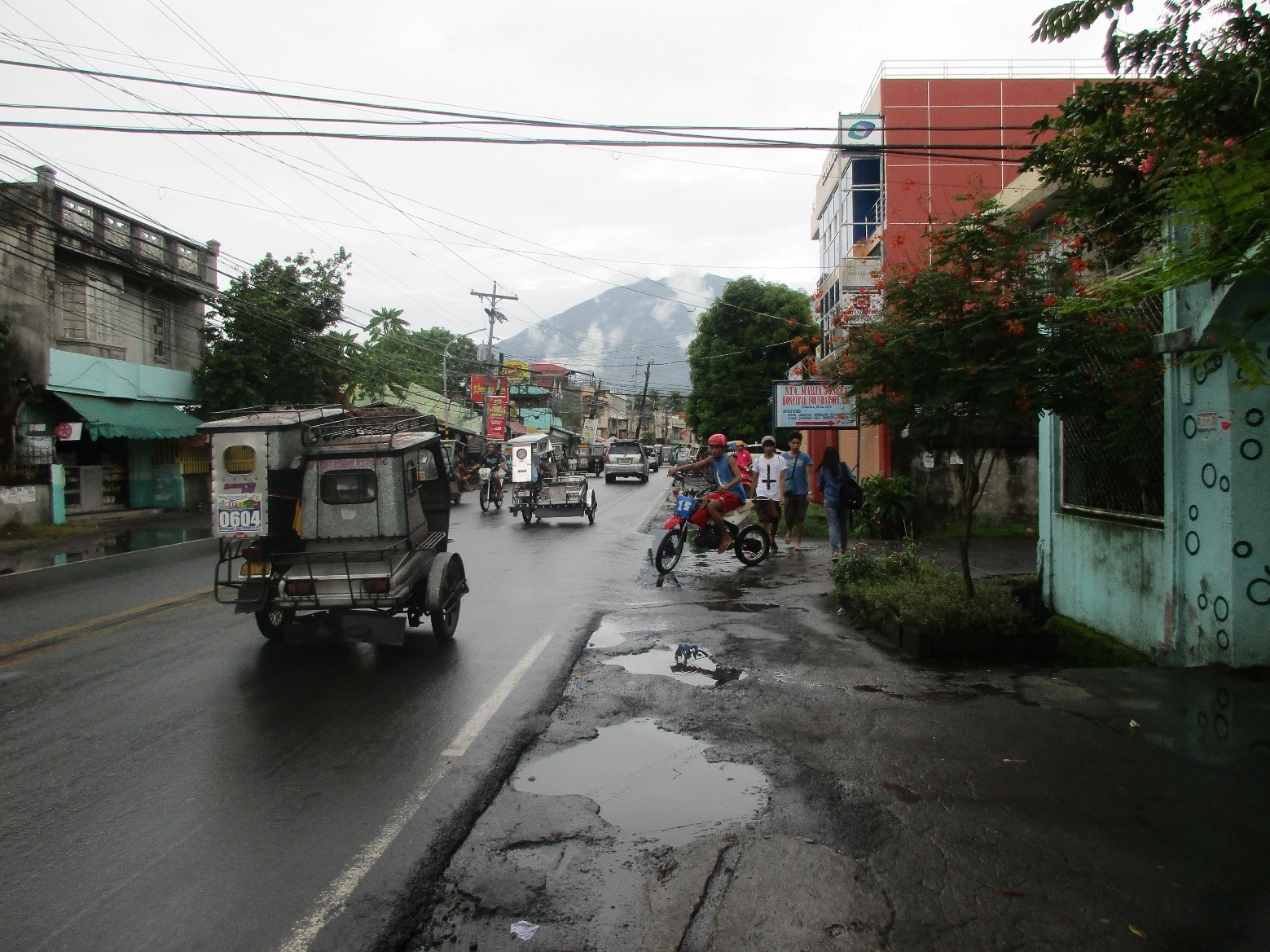
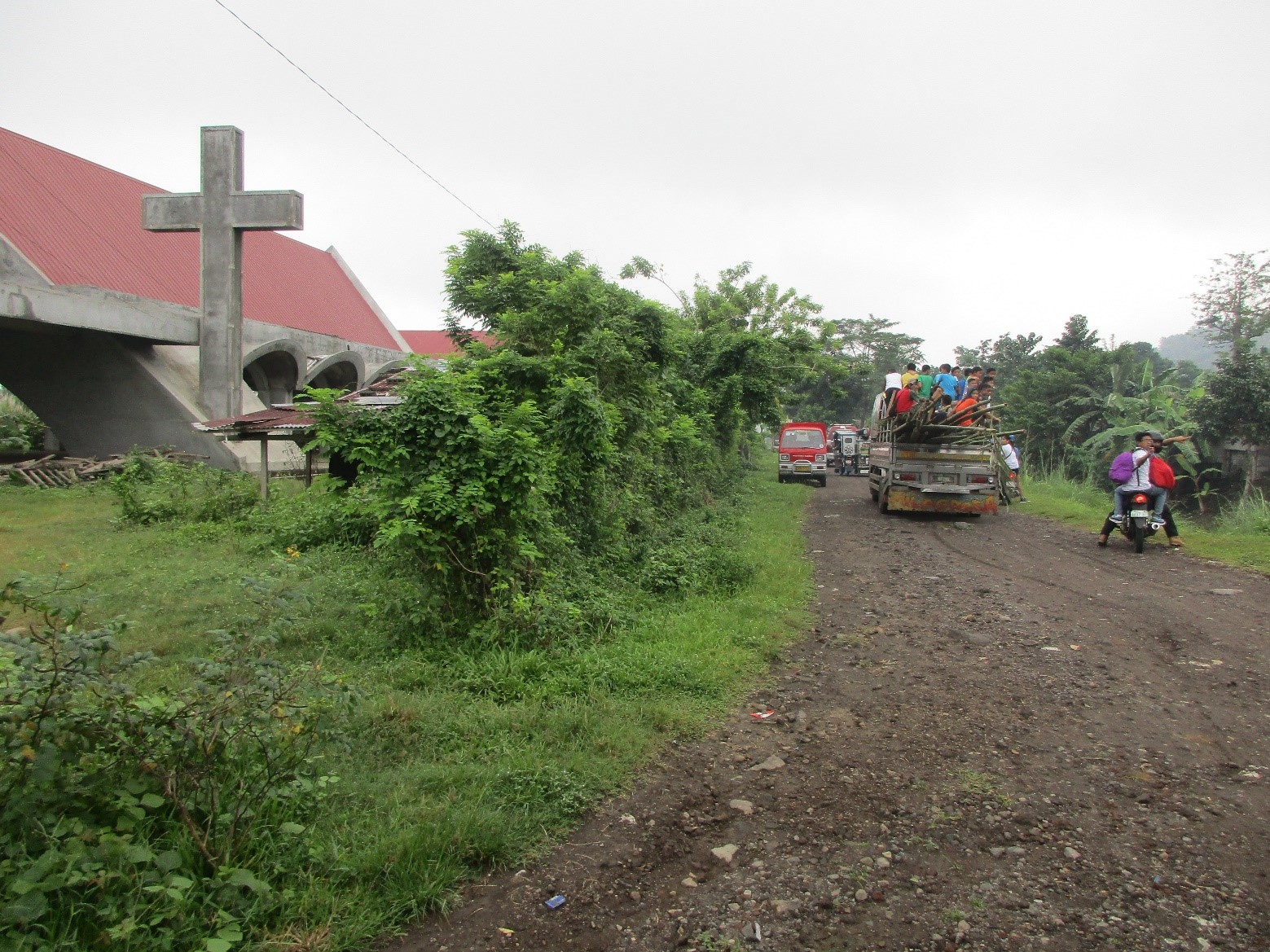
Mareike and Rey fetched me from the airport and I was introduced to the traffic, nature and lifestyle of this magnificent country. With big eyes I stared trough the car window, seeing tricycles, vans, pujaks, jeepneys and sometimes also cars passing by, even though it’s a one-lane street and there is oncoming traffic. During the next 10 minutes of watching, I could spot at least 20 situations where an accident was almost inevitable. The streets are loud, everybody honks at each other, and because everybody is honking, nobody feels addressed and everyone is just doing what he wants to do, because nobody cares anyway. There basically are no rules in traffic here.

Except maybe three:

  1. If you are scared, you´ve lost
  2. Honk ( …because there still is a 1% possibility that out of the other 100 vehicles on the street, the vehicle you want to address hears you; because everyone does; and it’s a nice sound)
  3.  Always plan to drive at least 2 hours longer than you would in Germany, because the fastest speed is around 40 km/h and traffic jams are everywhere

Three weeks later I can say: Yes, it is scary, but it also works somehow. Until now I never saw a serious accident. Just hundreds of almost-accidents.

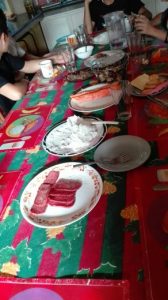
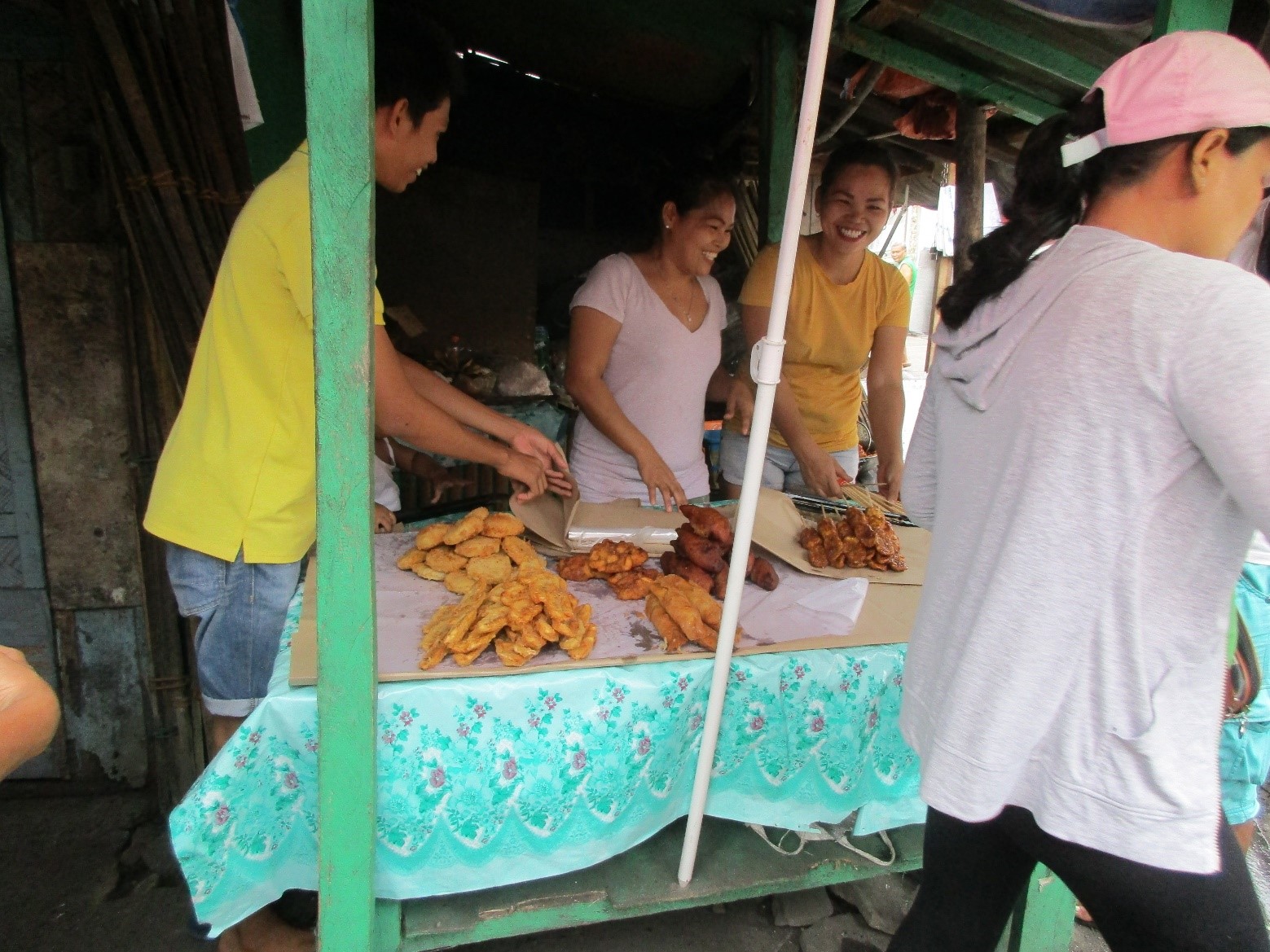
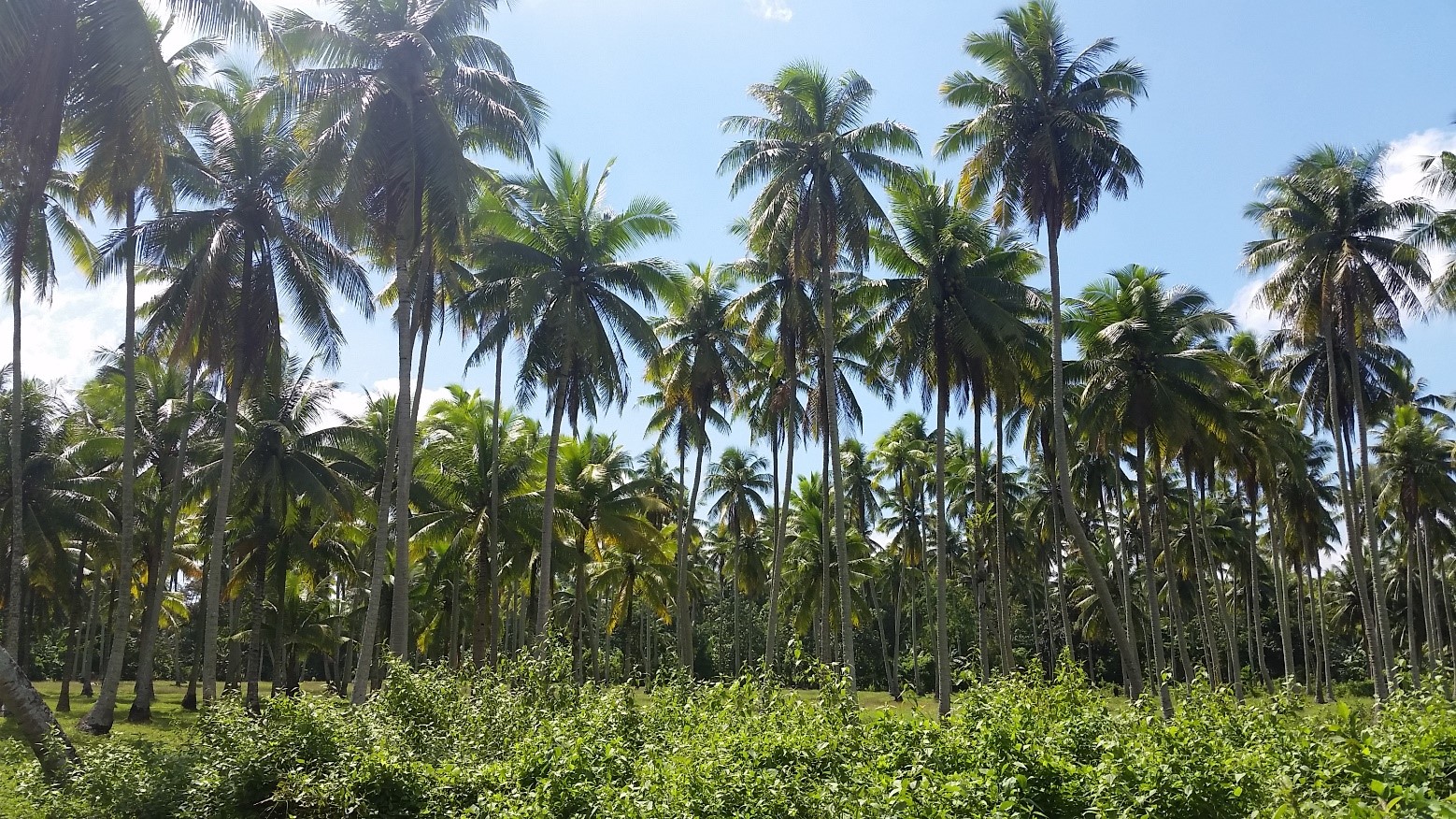
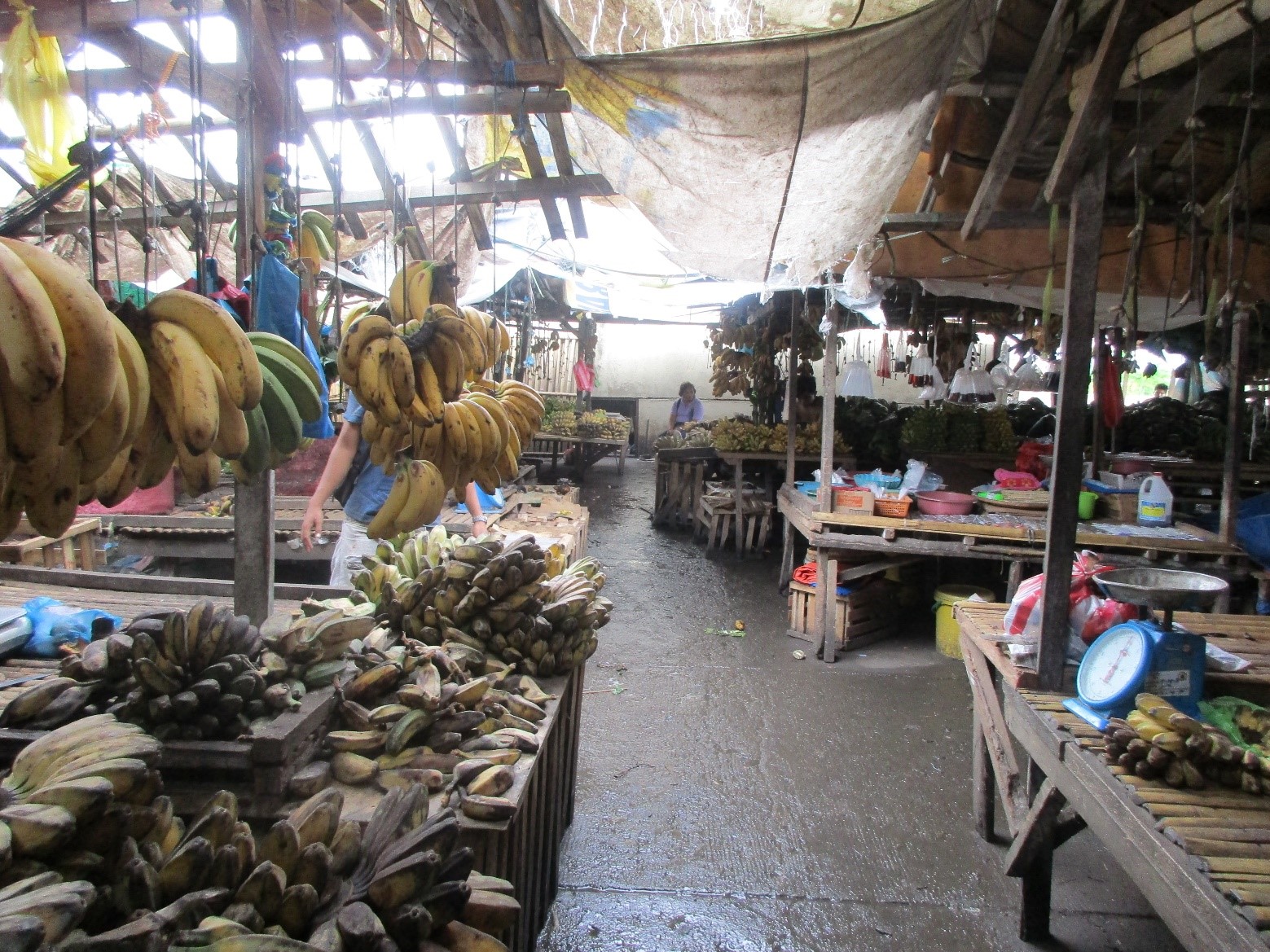
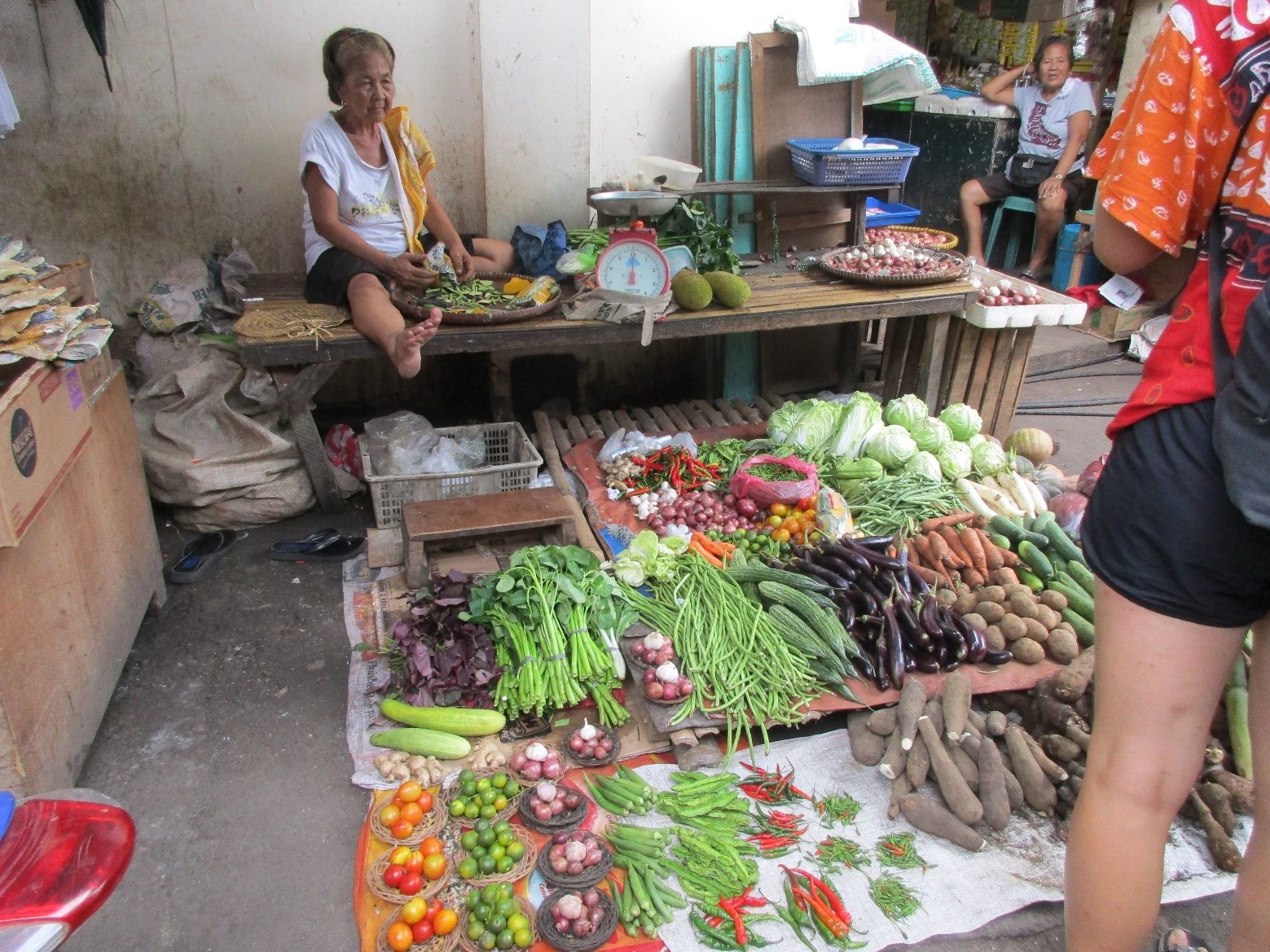
The nature here is absolutely breath-taking. For someone who never got anywhere near tropical countries, it is marvellous. Palm trees and rain forests everywhere. Tropical fruits and vegetables such as dragonfruit, mango, papaya, buko, malungay and opo are fantastic and certainly a very good reason to stay here. Every food they serve is a little adventure for me that I wouldn’t want to miss.

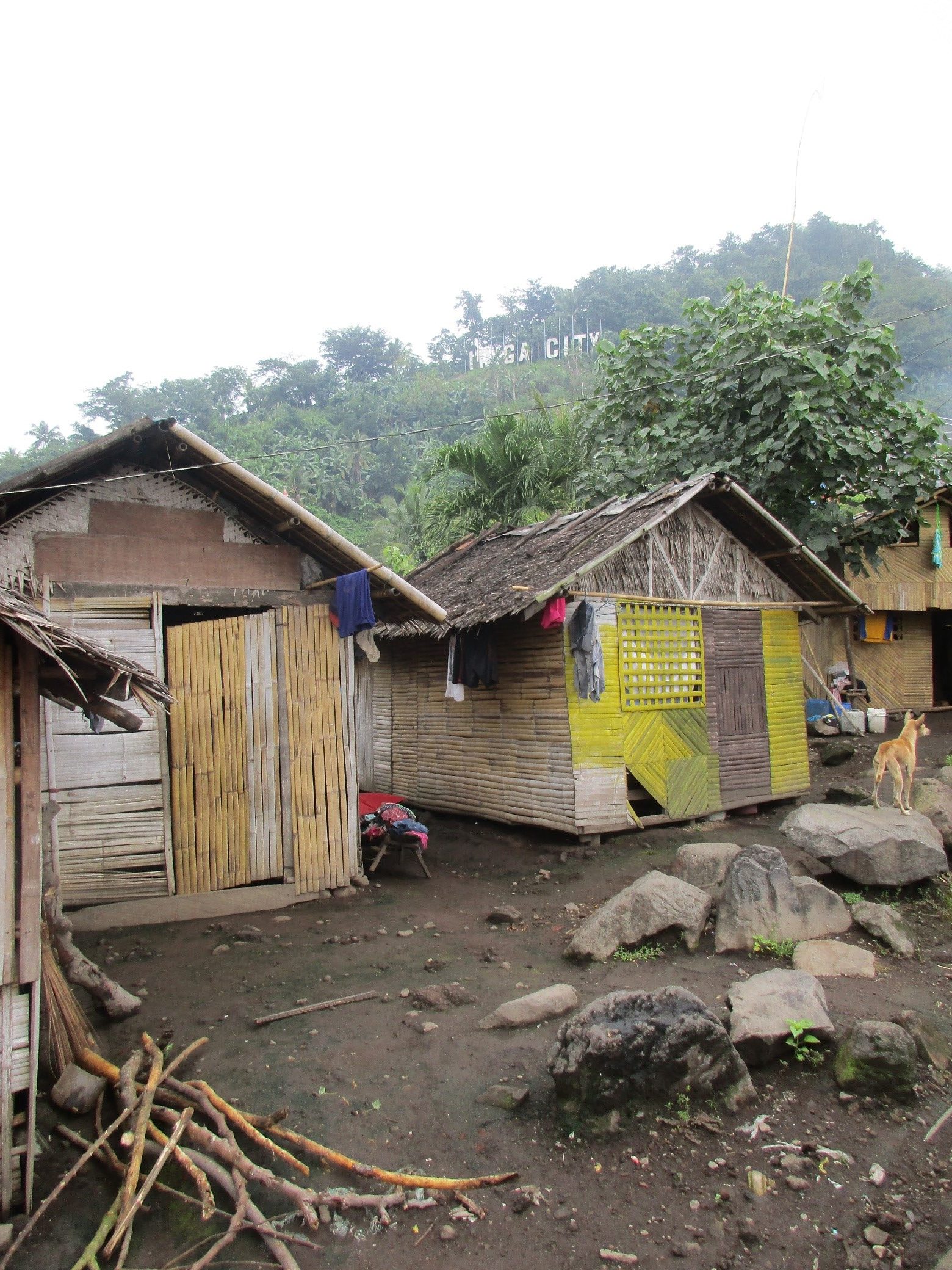
The lifestyle here is also different. If you google pictures from the Philippines you are most likely to see rainforests with tiny little houses in between. Very sweet, native and kind of original you would say. Nobody tells you, that these people don´t have a solid floor, they don’t have tiles or parquet in their house, it is just dirt, pure soil. In most cases they don’t have clear running water and electricity is way too expensive.  Oh, and I forgot to say that eight humans live in that shack, which is not bigger than my bathroom at home. This is the reality of most Filipinos. And I don’t speak of the very  poor people here, this is basically middle class.

Everything is different – but how could it not.

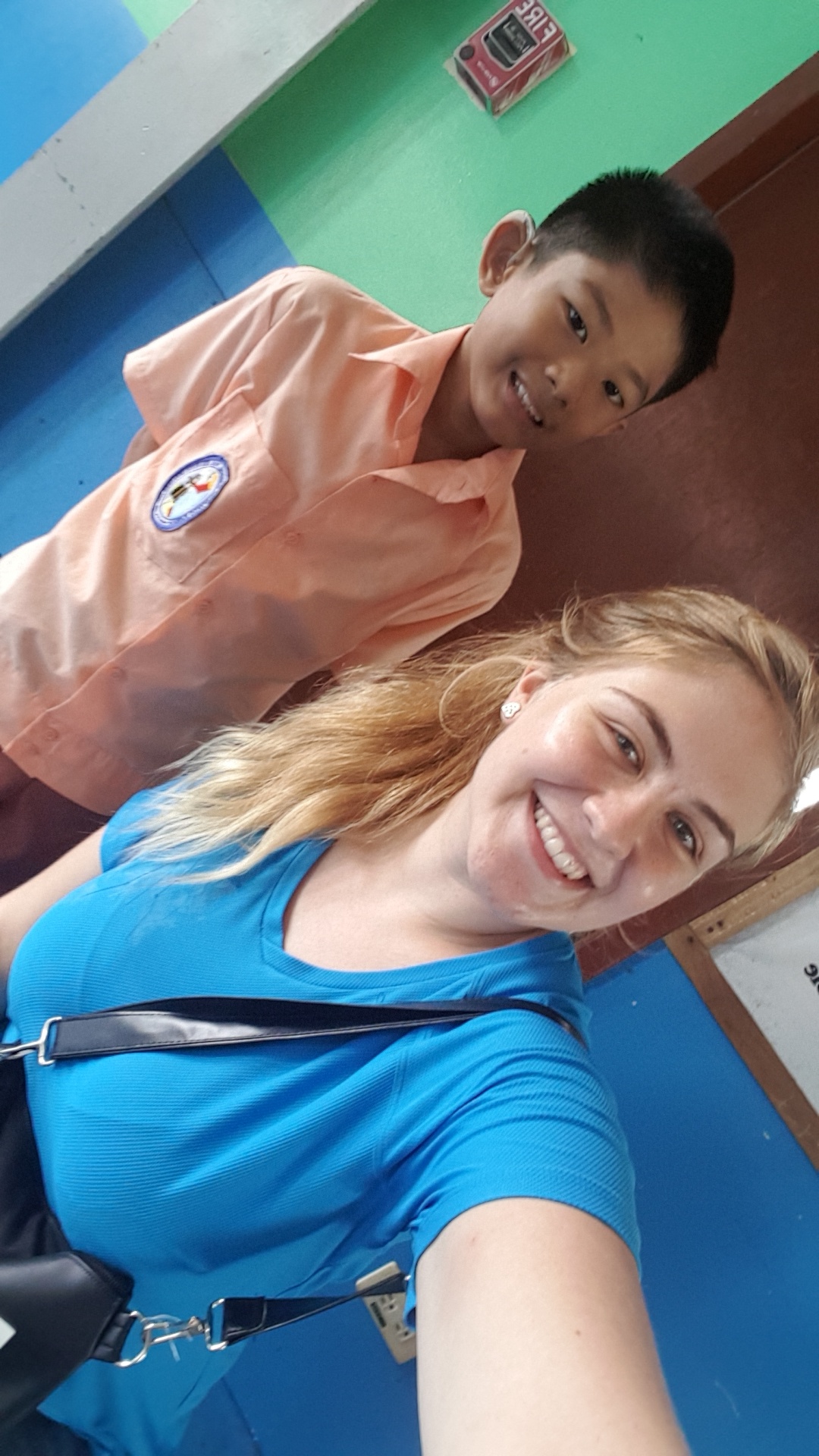
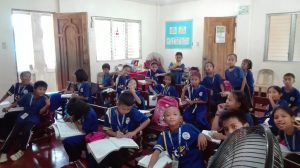
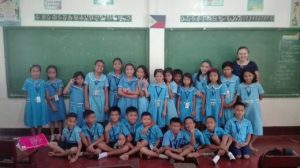
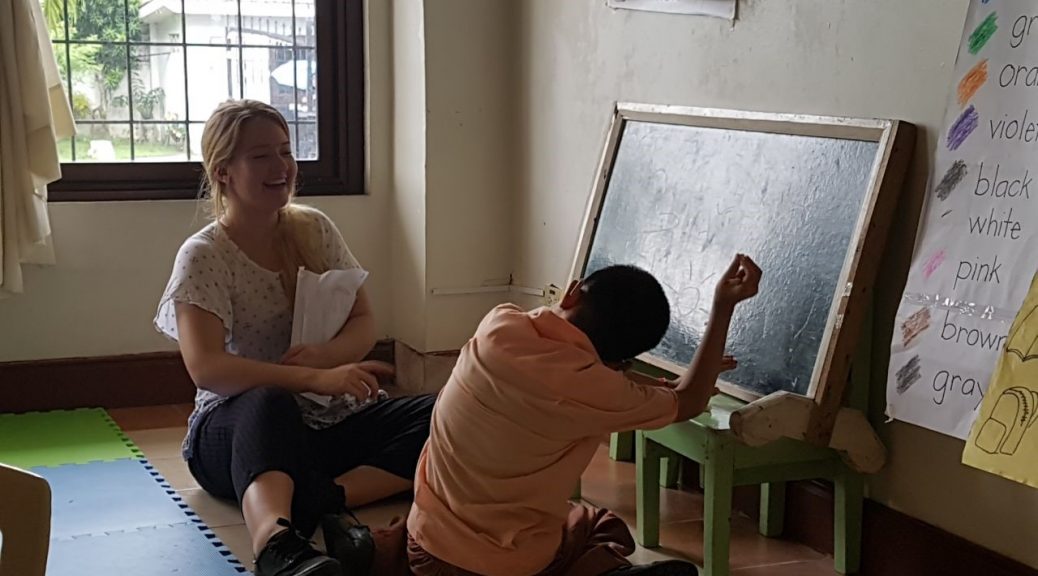
Apart from all these impressions I also have an aim here. Helping where I can. And I can help at the Joseph Gualandi school for the deaf and mute.  The 45 kids in this school can´t hear, which is why they learn how to lipread and to speak properly. Both is very difficult, but the catholic sisters who run the school, somehow manage to teach it to them. My task is to help cooking for the children in the morning and give extra lessons for three students in lipreading and writing in the evening. The kids are lovely. Mareike and I teach the five year old Catherine, the 6 year old John-Phillip (he has ocean blue eyes and dark skin colour and hair, the most fascinating kid I have ever seen) and the 7 year old Romyr. Every one of them is overwhelmingly sweet and I love teaching them.  I also love the work because I also got to meet the coolest sisters in the world. Young, open-minded, loving, cookie-baking, zumba-dancing sisters, who appreciate us even more than they should and want to show us everything  in their country.  Apart from praying before eating, there is no rule set for us. They give us space. In just the last three weeks we were able to create a Memory game for the kids to practice their memory, they took us to house visits of the poorest children, we learned the song “Perfect” from Ed Sheeran in sign language, we taught children from another school how to sign animals, fruits and numbers, we were baking cookies with the children, ate buko, learned to eat traditionally with our hands and we were even asked to create dance choreographies in ballet, hip hop and kickboxing  for a presentation on the 20th of December.

Of  course – it´s not just fun and rainbows here and I will elaborate on that at another time, but all in all I can say: it was a successful month, I´m glad that I´m given that chance and I´m up for much more.

Monatsbericht Oktober von Mareike

Another month filled with amazing experiences is over and I wish I could go back to the beginning just so I could live through all of them once again.
I left Fatima Center in Iriga on the first of October and now moved to Naga City for good.
My new work here is at the Joseph Gualandi school for hearing impared children together with Lena Kolb, who arrived in here October 3rd . Working with Lena and working itself fills me with so much joy every single day. Getting up early in the morning is so much easier knowing that I will get to go to work at this amazing place and actually do something that will change lives for the good.
Our task at Gualandi is helping the sisters cook snacks and lunch for the approx. 45 children. We also help them when it comes to eating since a lot of the children are still very young or just simply don’t know how to use spoon and fork for eating. It is not that their parents never taught them how to use spoon and fork because they are savages, which one might think just by looking at them behaving, but rather because they just can’t afford buying silverwear. I was wondering why the children don’t know simple tasks like that but once the sisters shared with me how poor most of the families are a lot of things became clear to me. They also offered Lena and me to join them for house visits to the poorest of the poorest families. The sisters at Gualandi try to visit the families of the students as regular as possible. When doing so, they bring them groceries and look at the current situation that the family is in. They help as much as they can and even if they only have very little themselves, they share it.
Another task that Lena and I are sharing at Gualandi is teaching 3 students who need special attention when it comes to lipreading, speaking, writing and solving simple math problems. I really enjoy teaching those children. They are full of joy and appriciate everything we do for them. When we noticed that they have small problems with their short term memory we decided to make a memory-game for them. We went to a bookstore, bought old books and crafted a game by cutting out pictures from the books and sticking them on cardboard. Both, the kids as well as the sisters, loved our idea and enjoyed playing the game. By now we can already see them advancing at playing the game.
It was also 2 of our 3 students that we got to visit when we went out for the house visits. All in all we visited 8 families. 5 of them are living in the Naga area, 1 in Pili and for the other 3 we had to drive further into the middle of nowhere. Visiting them, Lena and I brought them homemade cookies and the Gualandi sisters shared some groceries and rice with them.
It is very hard to find the right words to describe the feelings I had while visiting the families. The poorest of them lived in Balatas, right by the dumpside. The student is in 4th grade and her parents are collecting trash and selling it for a living. The mother is currently pregnant with their 8th child and their house is just a hut build out of cardboard boxes and trash, not bigger than our pantry back home in Germany. I did not feel bad seeing them and I was not scared of being there as some people might would have been. I took everything in and tried to understand that these people might be very poor and live in bad conditions but they are still happy. The kids eyes where still bright and even the pregnant mother had a big smile on her face when we gave her our homemade cookies.
Other families that we visited invited us inside of their house. With Lena, Sister Nora, Sister Sheryl and me, the house was already crowded. Most of them had only one bed for the whole family, usually a big bamboo plank that is used for sitting on during the day, eating on for breakfast, lunch and dinner and sleeping at night. The houses where build out of bamboo, wood, leaves and cardboard. When entering, almost everyone appologized for not having chairs for us to sit on and everytime it seemed so totally out of places for them to worry about us not sitting. I felt very welcomed at every family and instead of feeling ashamed for being poor and needing help from us, they openly showed their appriciation for our help and that felt amazing.
Some of the families shared their stories with Sister Nora and Sheryl, who then translated those stories into english for us. One of our student’s father is a fisherman. On a good day he catches one kilogram of fish, which he then gets to sell for 100 pesos at the market. 100 pesos are not even 2 Euros. 2 Euros a day for a family of 4, on a good day, is not enough by far.
Sister Nora shared with us that most of the families don’t pay for their childrens tuition just because they can’t afford it, yet the sisters believe that everybody deserves and needs education and therefor still make sure that the children are able to visit Gualandi.
It was really an amazing opportunity for us to visit those families, see their homes, their way of living and get to know the mentallity. Poverty is always present in this country and we see it whenever we leave the apartment but actually being invited into the houses and learning more about the stories of the families really hit me in a deep way. I am glad that I am able to do my best to help those children learn, help educate them and therefor help them secure a better future for themselves and their children.

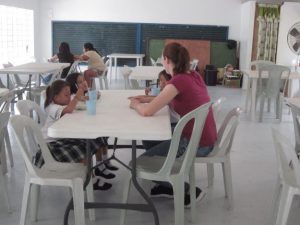
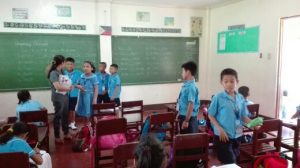
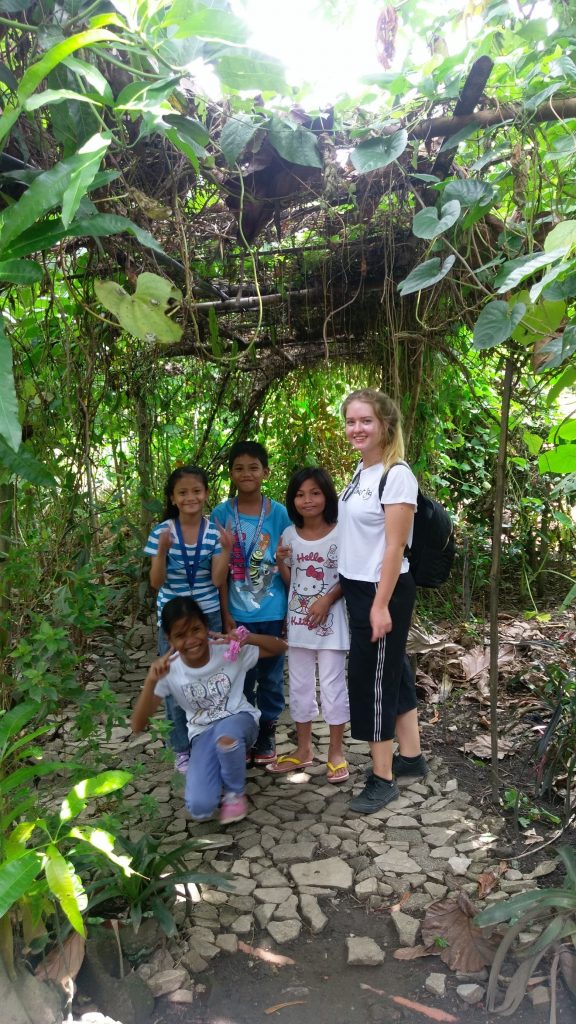
Attached are pictures of giving out snacks and drinks to deaf and mute children in Tigaon where Lena and I taught sign language as well as  a picture of me trying to figure out their names by having them write it on the blackboard, of cooking at Gualandi and with a student of ours .

Monatsbericht September von Felix

Have faith – the church, its influence and cultural importance

When it comes to the matter of religion, the Philippines certainly stand out from the rest of the entirety of Asia. According to statistics, 86% of all Filipinos are Roman Catholic and 8% of the population belongs to other Christian denominations, including Lutheran churches (source: asiasociety.org).There is no other Asian country with a higher percentage of Christians among its people.

Historically, this can be explained by the long-lasting occupation of the Filipino archipelago by the Spanish, who first began Christianization in 1565, which continued for more than 300 years. But what influence does this have on the culture today? And how can it be perceived in everyday life?

Well… To be honest, that is a difficult question to answer. Due to the short period of time I stayed in this country and my personal cultural connotations (both positive and negative), my overview of the local culture, its unique habits, traditions and beliefs is still very limited. I can only recount my impressions from within these boundaries. Thus, it is important to remember that the following report consists of observations from my personal point of view.

In my experience, the church, especially the Roman Catholic institutions, have a great influence on this society. First of all, churches are omnipresent. Often small independent Christian communities share buildings with cafes, shops and restaurants, where they maintain chapels and other facilities. Also, gigantic churches can be found in Naga city, for instance, the large, dark-brown and gold Cathedral in downtown Naga and the big white and blue Basilica, located a little more outside of town. Furthermore, opposite of the Cathedral, very close to where we volunteers live, one can find the enormous, segregated complex of the archdiocese of Caceres, where the current archbishop R. TIrona resides. In my opinion, these status symbols perfectly portray the importance of the church in this city and – presumably – likewise in the rest of the country.
Furthermore, there is an abundance of religious institutions, dedicated to serve a specific social purpose, which (in Germany) people would usually expect to be run by a government. Yet in the Philippines Christian organizations take that kind of social responsibility in many cases. After all, all of our current partners are run by religious people. The Missionaries of the Poor, whom I work with, are after all the Missionaries of the Poor. The Fatima Center Integrated Farming School and orphanage is run by nuns. Our newest partner, the J. Gualandi School for the Hearing Impaired, a school for deaf and mute children, is equally facilitated by an order of Christian sisters. And we already encountered or heard of various other religious groups operating other social institutions such as a public school, a hospital or a residential home for sexually abused children. Moreover, these facilities do not only co-exist. As I have experienced, religious groups know of one another and maintain strong connections and friendships among its members. They certainly also support each other’s work but how in particular, I do not know. In any case, these organizations are closely connected and form some sort of social network which the members of all social levels are constantly aware of. One day, a woman came to the Missionaries of the Poor apostolate and asked for food because her husband was sick and could not work. She was not sent away and I was assured this happens a lot. My impression is that acts of kindness like these are one reason why the church plays such an enormous role in the social life of so many people. They help and many people appreciate that.
On top of that regions in the Philippines have their own Christian patron saint, whom they idolize. Here in the Bicol region this would be Mary, the mother of Jesus, or – as she is referred to here – “nuestra senora de Penafrancia” or simply “Ina”, which means as much as “mother”.

Every year in the beginning of September, the Penafrancia Festival is celebrated in Naga city, which means a time of prayer to the patron saint lasting for nine days, a so called “novena”, is being held. A small statue, about 50 cm in height, triangular in silver and gold, represents the patron saint Ina herself. Literally millions of people from all over the Philippines come to the Bicol region, to Naga, in order to pray and honor Ina. Every day at every full hour different preachers hold masses in the downtown Cathedral, where the image is displayed. But the two highlights of the celebrations are two parades in the beginning and at the end of the novena. The first one, the “Translacion procession” traditionally takes place on a Friday. On that day a cheerful, colorful, musical but also praying crowd accompanies the image of Ina from the Basilica to the Cathedral. The second one, the “Fluvial procession” consequently happens nine days later on a Saturday afternoon, where Ina is placed on a large boat on the Naga River – alongside countless colorful boats full of young men – and shipped back to the Basilica while thousands upon thousands of people on either side of the river are cheering and singing. We were part of the crowds at both parades and attended church during the novena. I have to say, it was one of the most fascinating, intimidating and astonishing experiences of my entire life.
At last, I would like to include some of my personal thoughts about this topic. When I was invited to the 37th birthday party of the superior of the Missionaries of the Poor, it turned out that quite a number of local politicians were present as well, among them the mayor of Naga city. He held a speech, was thankful and happy. The friendship between the mayor and the superior of MoP made me think about the connection between church and politics. And I asked myself this question: What chances of success would an atheist or a member of another religion have if he or she was a candidate running for a political office, such as the mayor’s, in this society?

Now this is my personal opinion: I believe that these people would not go very far in their political career, if at all they had one. Why? The members of a democratic society want their politicians to represent their beliefs and if 96% of a society is Christian, the answer to the question which candidate this vast majority would prefer is quite clear. To be honest, there is nothing wrong with that, I think. We, also desire our German democracy to be representative. Apparently, this includes 12,5% of blown-up nationalism but that is another story. The Christian and Catholic church pervades the Filipino culture like veins and arteries pervade the human body. Whether it represents the heart, too, I am not sure. But what I do know is this: The largest chunk of Filipino society is Christian and many, many people express their beliefs actively by attending church services, supporting/donating to religious institutions, praying as they begin or end a meal or a long journey or simply by wearing jewelry with religious symbols. This matters to the people here and it is clearly visible every day.

Monatsbericht November von Corinna

public transportation in the philippines

Due to the fact that we live in Ateneo de Manila, which is on Katipunan Avenue, there is heavy traffic every day. Heavy traffic in the Philippines can not be compared with heavy traffic in Germany. Not only that the traffic rules are sometimes not very visible, but there is such a high amount of cars on the street that traffic jams are the rule not the exception.
To reach your destination with public transportation, as some people in the offices do, you have many opportunities to do so. But you have to say that people here sometimes have to get up at 5 a.m. to be at work at 8 a.m. when they ride public transportations, because of the traffic even when it would be a 15 minutes ride without traffic.
First, there is the LRT which is comparable with normal trains, so that there are stations for example one on Katipunan which drives in two directions. If you arrive in other areas for instance in Cubao, there are more trains you can take to reach more destinations. Compared to german prices, the LRT is way cheaper. You have to pay around 25 PHP (converted not even 50 ct at the moment) to go to the final destination. Upside of the LRT is the air condition in the trains, even if the effect of it is narrowed by the high quantity of people in it, and the speed, because there is no traffic on the rail tracks.
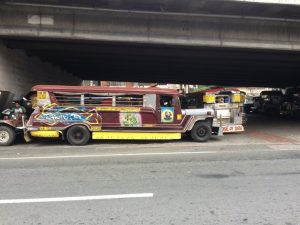
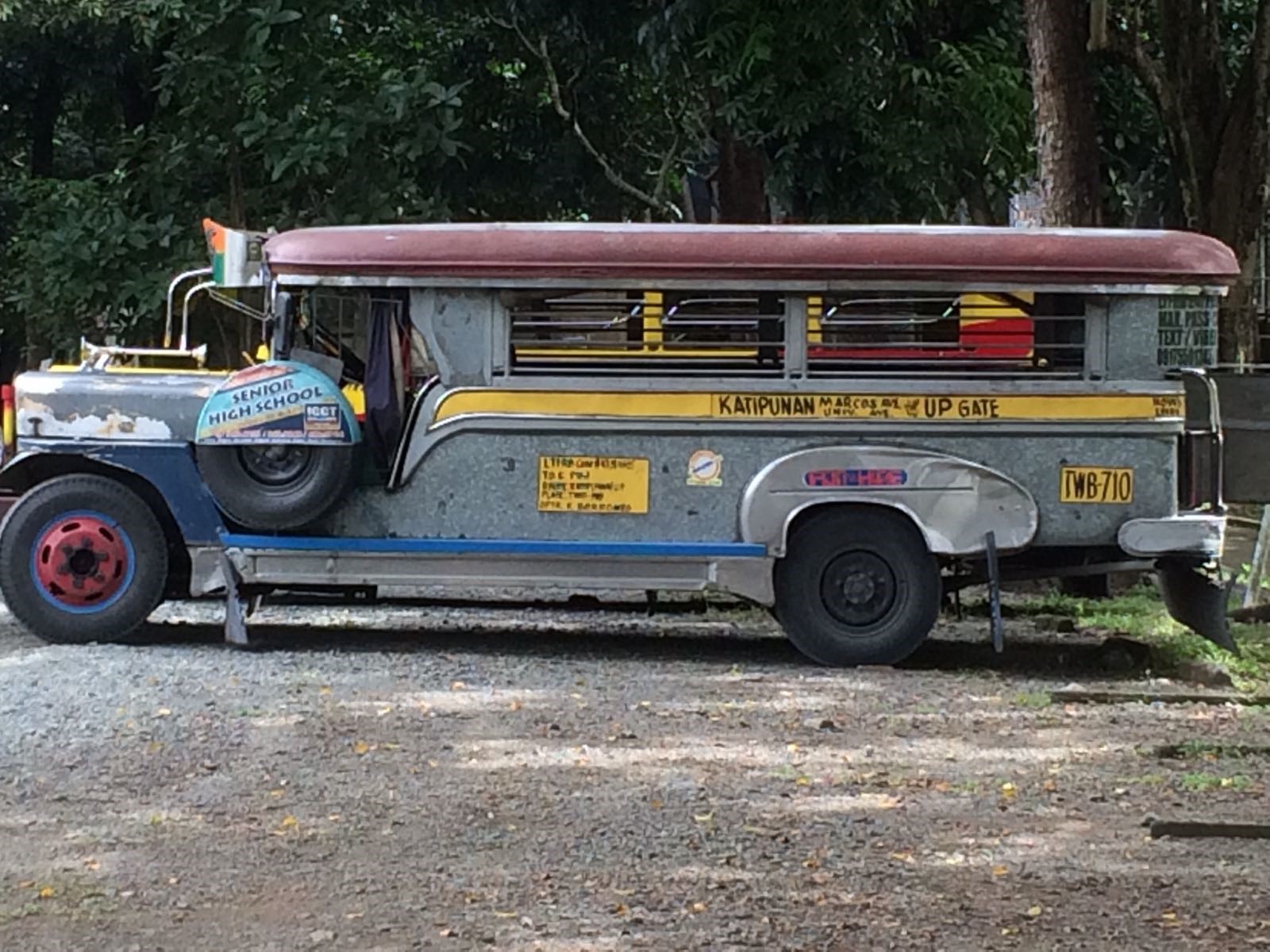
Another opportunity for people who do not fear the mixture of the heat outside and body heat of 20 people around you, there are jeepneys as well. The typical and popular transportation for the Philippines is again very cheap, so that you will pay 7 PHP for the shortest distance until 17 PHP if you really ride it around 1 hour. At the front glass pane they usually have a sign with their destination on it like ‘’fairview’’, ‘’LITEX’’ or ‘’UP’’, so you approximately know where they go. They don’t have exact stations or stops. Consequently, to enter a jeepney, you just have to lift your arm and they will stop. In the jeepney your payment will be consigned across it to the driver and if you want to leave, you just scream that you want to go out. Since you can not look the timetable or anything else up in the internet, foreigners are having a hard time to know where to go with which jeepney, therefore it would be necessary to drive the whole route with a Filipio once to know where to go out and enter.

20161201-corinna-1

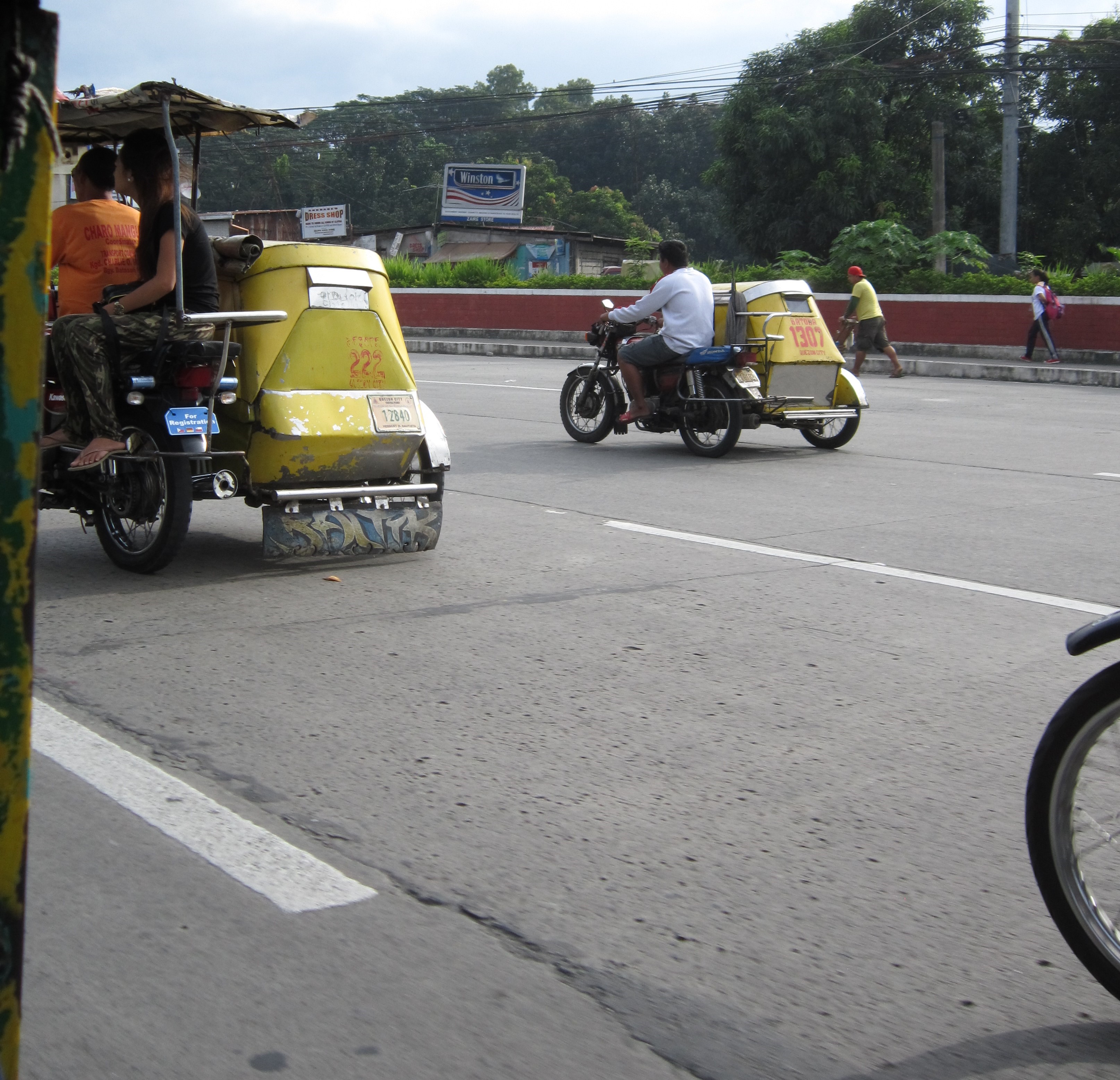
To reach a short distance destination, one can also use motorized tricycles, in which – surprisingly – 5 or 6 passengers fit. By reason they always have their specific areas you can not use it like a cab. Of course you can say your destination, but if it is outside of their district they will not bring you there. For tall people like me, riding with 5 persons is sometimes uncomfortable since you do not have any space for your legs, but this kind of transportation is cheap (depending on your destination and if they want to take advantage of foreigners between 8 – 50 PHP) and relatively fast as well, because the small tricycles are having a better chance in a traffic jam drive ahead.

20161201-corinna-2

A bit more comfortable are the buses with air condition and around 20 PHP or more for one ride. Of course they do not have stations as well and do not drive in the outer districts but in the huge roads like Katipunan or Commonwealth. Pretty similar to this, there are vans – a mixture of cab and bus – which one can use. As well as the others, they do not have stations and just drive the same route over and over again.
If people want to spend more money on more comfortable transportation, there is the opportunity to take a cab – which is the most expensive one – or to take an uber or grab, which is not that expensive. The prices for cabs in general are still not that expensive like they are in Germany, but in comparison to other public transportations it is expensive nevertheless.
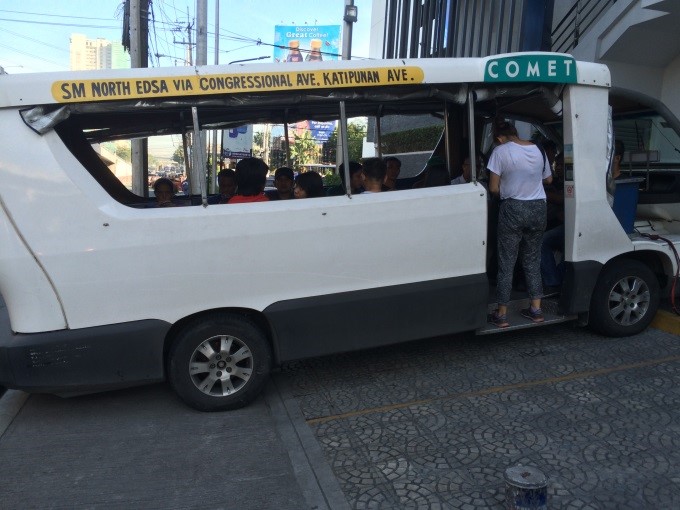
Unfortunately, the air pollution especially in tight populated areas is extremely high, because of the huge amount of cars and old facilities of the public transportations like jeepneys. However there are rudiments of sustainability seen in the city. For example the ‘’Comet’’, which is an electric jeep and a first step to a sustainable development.

20161201-corinna-3

In conclusion, on the Philippines, more precisely in Manila, there are way more opportunities of public transportation than there are in Germany. Also in comparison it is much cheaper to reach your destination here, even if it is most of the times not that comfortable. This is mostly reasoned by the heavy traffic and the climate, which makes the long time sitting in public transportation even more exhausting.

Monatsberich November von Franzi

                          Public short-distance traffic in the Philippines

The public short-distance traffic in the Philippines is way different than it is in Germany or in other European countries. Here in Manila you have much more opportunities if you want to use the public transport system. You can take jeepney (or in short just “jeep”), a tricycle, sometimes a bicycle or of course a train, a bus or a cab.

Jeepneys have been traditional Willys-Jeeps, left by the Americans. Now they are one of the most common and also the cheapest form of public transport. Today the Filipinos rebuilt these trucks on their own but the technology is still is not the best. That’s why they are very noisy and often blamed as one of the major sources of air pollution in big cities. The Jeeps always ride the same route like a bus but they don’t have stops. They pick you up and drop you off wherever you want, along this specific route the jeep uses. If you want to ride one you just have to wait next to the street until a jeep, which goes into the direction you want to go, passes by. (They have small signs which say where they will go.) Then you have to wave the driver and if he thinks that there is room left for another person he will stop and you can climb in. You can pay whenever you want. Just shout “bayad po” which means “paying” and pass the money to the driver. If you want to get out of the Jeep you have to shout “para po” which means “stop” and the driver will stop so that you can go off. For Corinna and me the drop off is always the most difficult part because if the jeep is full (and the jeeps are almost every time full) it is so hard to see something trough the little windows, so we are always wondering if we have to go off already.

Since our fist ride I really admire the jeepney drivers. They have to handle so much things at one time. They have to drive trough Manila’s traffic, have to hear trough all the noises if someone wants to go off or wants to pay. Then they have to take the money and give the change and at the same time they have to have a look if someone on the street is waving them. For this difficult work, the drivers receive 10-40 Cents (6-17 Php) per passenger (depending on how long their ride is). If they own their jeep on their own, then they can keep everything but often they have to pay a daily rent to the person who owns the jeep.

A typical Jeepney
A typical Jeepney

The second cheapest form of public transportation are the tricycles (or in short just “tric”). Tricycles are Motorbikes with small cabins next to them, in which passengers can be carried. They work almost like a taxi with the difference that they will not go out of a certain area (or only for a lot of money). Furthermore they are not allowed to use highways because they are to slow. If you want to ride one you can wait next to the street until an empty tric passes by or go to special tricycle terminals, where empty trics wait for passengers. But then the drivers usually wait until the tric is full, which means that there are three persons sitting in the small cabin and one or two are sitting behind the driver.

Picture of some trics taken out of one

In some areas there are also bicycles, which are tricycles with a bike instead of the motorbikes.

The big cities like Manila of course have also trains buses and cabs. They are pretty similar to the ones we know expect that everything is way cheaper. Last weekend we took a cab for about 20 minutes and paid together only 100 Pesos, which is round 2 €.

But what you don’t have here are good side walks. Sometimes there are no side walks at all, so you have to walk along the right side of the street. Often the side walks are blocked by parking cars or street vendors and very often the side walks are in a very bad condition with a lot of bumps and holes. In the beginning I asked myself the question: “Why does the government here doesn’t invest in building better side walks?” Maybe then people would walk more often, or take their bike and the horrible traffic could be reduced at least a little bit. The answer to this question is very easy. In the Philippines it is to hot to walk or bike outside. The temperature here usually never falls under 25 degrees. You can not go to work or to school by feet if you don’t want to arrive there completely soaked with sweat.

That and also the steady growing of the population in the cities leads to a lot of heavy traffic, which is a big problem here in Manila. During the rush hour in the morning and in the afternoon there are huge traffic jams every day. Since we arrived we met so many people, who need 1-2 hours to work just because of the traffic jams. That’s why on the one hand it is good that there is a huge variety of public transportation options but on the other hand the jeeps and trics, who always load and unload passengers at the side of the street make this problem even worse, as they then block the vehicles behind them. Another problem with the public transportation is, that even if there are so many public vehicles you can use, they aren’t enough. During the rush hour buses, trains and jeeps are so crowded that you often have to wait for the next one and in the tric terminals there are long queues. This problem causes that wealthy people, who don’t want to lose much time in traffic every day, have own cars with a driver so that they can use the time in traffic for sleeping or working. While having a driver in Germany is something only very very rich people can afford, here it is a lot more common. We met a lot of students, employees and even grad school pupils here in Ateneo, who have their own driver.

All in all you can say, that traffic in general is a big problem in the Philippines. The huge variety of public short-distance traffic options is a step in the right direction, to reduce the the traffic. But for working on the reduce of greenhouse gas emissions, the country should be more strict with the emissions of their public transportation vehicles (especially the jeeps and trics).

Monatsbericht Oktober von Franzi

Our arrival, first impressions, orientation and our daily life

Our adventure here on the Philippines started with a very relaxed fist week at the campus of the Ateneo de Manila University. We weren’t allowed to leave the Campus at this time and got to know a lot of different people from many different offices, with which we will work together during our time here. Moreover the whole Campus (which includes a high school, a grade school, a college, many different offices, cafeterias and even a church -in short: it is very big) was shown to us and we got to know the main rules of campus life. For example that every morning the national anthem is played on the whole campus and as soon as you hear it you have to stand still. This rule counts for everybody and everything, so every morning from now to then every vehicle, every student who was jogging to his class a second before and everyone else stops and doesn’t move anymore until the national anthem is over.

In our second and third week we started working in the feeding program of ACED (=Ateneo Center for Educational Development). This program makes it possible that undernourished children get the chance to have a full meal at least once a day in school. Every morning we had to get up at 5am and then take jeepnys (jeepnys are vehicles, which are originally former US military jeeps, left over from world war one and today one of the most common forms of public transport in the Philippines) and  tricycles to get to Bagong Silanan Elementary school in our first, and Cainta Elementary School in our second week. Both areas Cainta and Bagong Silanan are poorer parts of Metro Manila. There we cooked lunch for 6oo children together with other volunteers, mostly parents who have children at this schools. We helped with preparing vegetables and chicken, filling the food into the lunch boxes and cleaning up everything after the kids are gone.

Bagong Silanan Elementary School
Cainta Elementary School

Besides cooking, one of our tasks during the feeding program is to interact with the children, check their names and convince them to finish their meal, because they often don’t like vegetables and therefore refuse to eat them. While checking the names of the children we recognized that many filipino parents love to give their children special names. There were kinds who had Julius Caesar, John Lennon, King James or Kurt Cobain as their first name. Later this day we asked a member of the ACED office and found out that it is a common thing to give your kids such names.

While working in the kitchen we had a lot of time to talk to the parents who worked with us. Sometimes we had some struggles with understanding each other because English is their second language as well but all in all it worked. We asked them why some children who are in the feeding program don’t come and they told us that it doesn’t matter if the children go to school or stay at home. So sometimes the kids stay at home because they have to help their parents and sometimes especially after a Taifun it is difficult to get to school because of the floodings and the traffic. Then it would take too long to get there, so they rather stay at home.

In our fourth week we worked on Campus in the AIS (Ateneo Institute of Sustainability). There we had to collect data for a campus microclimate profiling project. Four times a day we had to walk a specific route across the campus and measure the air temperature, the current wind speed, the relative humidity, the barometric pressure and the heat stress index at several stops. Afterward we typed the date in an exel file and analyzed it.

Working on the microclimate profiling

One of my first impressions in general was the very hot and humid climate which makes everything so exhausting. At our fist campus tour we walked about 15 minutes outside and back in our dorm it felt like a marathon. Afterwards the supervisor of our dorm told us that right now the weather is „cold“ because it is rainy season at the moment and that it will be way worse in February.

Another impressive experience in our fist days working outside the campus was, that we as white foreigners attract a lot of attention (especially in the poorer areas). Some people on the street turned heads when they saw us, the children, who nearly never see foreigners in ‚real life‘ sometimes can’t stop looking at us and even a few teachers came just to take pictures with us.  At the same time we were sometimes treated very respectfully. For example at one of our first days when we were on our way to Bagong Silanan we walked along the sidewalk and there were two women standing in front of us, talking to each other. One of them saw us and pulled the other one to the side so that we have enough space to pass by. Then they started whispering and looked amazed at us. That was such a strange situation and I felt a bit insecure.

But normally the people we meet are very very friendly and kind, the parents and teachers in the schools as well as the people from Ateneo. We were invited for lunch or dinner so often, the parents brought traditional filipino finger food to the kitchens and we were taken to different places in Manila on the weekends by students or members of the different offices here.

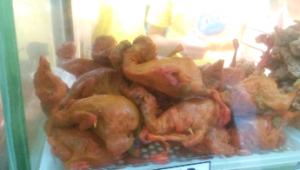
Furthermore we tried as many different typical Filipino dishes as possible in our first few weeks. One of the most exotic snacks we had, are the so called ‚one day old chicks‘. These small one day old chicks are eaten butter-fried together with a vinegar or sweet chili dip. I was surprised how delicious they are if you force yourself to not think about what you are eating.  It just tastes like a crunchy piece of fried chicken meat.

One day old chicks
One day old chicks

20161102-franzi-5

Another experience was eating Filipino spaghetti because they are sweet. Before, I could not imagine that this is possible but it is. Filipinos like sweet food at all that’s why spaghetti isn’t the only dish which is sweet. We also had sweet sausages, sweet bread, Taho and even sweet cheese ice cream.

All in all our first month here on the Philippines was a huge experience for me. I met so many different people, heard so many different stories and experienced a lot. That’s why I am really looking forward to the next seven months, which hopefully will be as amazing as my first one.


Monatsbericht Oktober von Corinna

Arrival, first impressions, orientation, rules and daily life

Due to the fact that Asian countries and especially the Philippines are different to our home country Germany, we had to get along with cultural differences on the one hand and distinction of our surroundings on the other hand. Two of the main topics for us are the climate and the food.
When it comes to the climate you could say that you need a very long time to get used to that, so that we do not feel completely comfortable yet. In our first days even walking or just sitting around were so exhausting that we had to rest almost the whole day although the temperatures now are quite ,,cold’’ in comparison with the rest of the year. Step by step we adjust to the climate so that we are able to work outside without bigger problems. Though we are sweating a lot more than in Germany wherefore we have to take a shower directly after finishing with work and change our clothes more often.
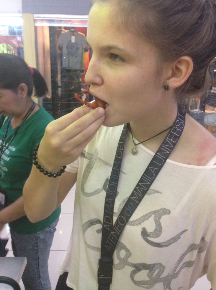
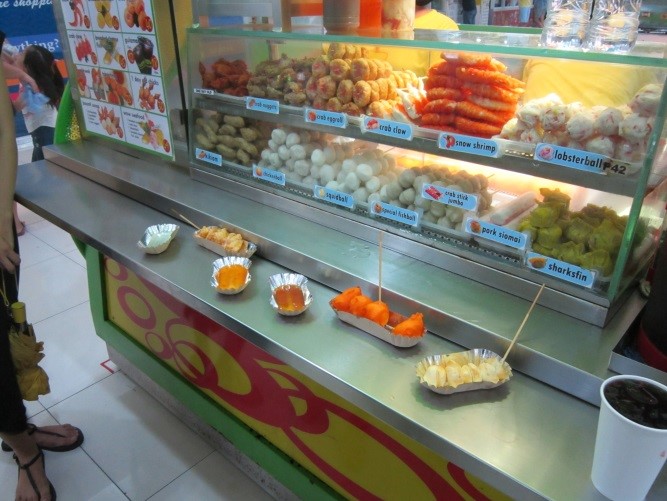
Our first experiences with food were almost entirely positive, so that we established together with Irene, a 25-years old Disaster Recovery Management student from the Netherlands, a list of food we want to try including things like Taho, Kwek Kwek or Balut at one of our first days here. During the first week, we already tried things like Kwek Kwek, Lobsterballs, Squidballs or Taho but also Adobo, squid with tentacles, the One-Day-Old, Halo Halo and other traditional or popular meals. Thereby we experienced that almost everything in the Philippines tastes sweet, even for example spaghetti and other food which is normally spicy in Europe. Of course there were dishes that we did not like at all, but that was rather the exception.

In the Riverbanks Mall, tasting some Philippine snacks

What directly comes to my mind when I think about the mindset of Philippine people is their obliging, helpful and especially happy attitude even if their life is not easy in some cases. The people we met are always anxious to help us in every situation and with every problem that arose up during our first weeks. For instance, Ricky and Julia, who are students at Ateneo, accompanied us to the University and answered all our questions. Afterward Julia also advised us in joining sport opportunities and also had dinner with us in the evenings. Moreover Michelle showed us the campus on our first day and the members of the office of sustainability always kept an eye on us and tried to help us as much as they could. Our supervisor Jaime was always exerted to help us in every concern that appeared during our first weeks. Not to enumerate all the people who helped us to settle in the new surroundings.
What really got to us was the jetlag we had for a few days. It was quite exhausting to adjust to the climate and  the time difference at once. In our first night after around 30 hours without sleep we just slept for four hours and were awake the whole night. In our second night the procedure was almost the same, so that we were really tired during the day. Therefore it took us around seven days to sleep the whole night.

In our first week at the Ateneo de Manila University we got instructed by representatives of the Ateneo offices like the ACED (Ateneo Center for Educational Development), Pathways To Better Education, Gawad Kalinga and AIS (Ateneo Institute of Sustainability), which are important for our volunteer work.
As we got to know, contents of our daily work in our first months in the feeding program of the ACED will be kitchen and feeding operations as well as data collection, visiting kindergarten classes and, at the beginning of the next year, Brigada Eskwela. However, one of the main topics of the feeding program is the reduction of malnutrition, stunting and wasting among children in poor areas of Manila. So far we visited the Bagong Silangan Elementary School and the Elementary School in Cainta, where we supported the parent volunteers and the ACED kitchen staff in preparing and packing the food and also handing the meal to the children and cleaning afterwards.

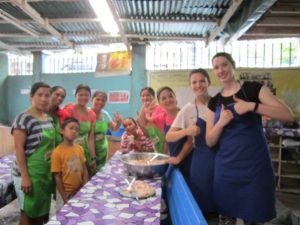
In Bagong Silangang with the parent volunteers
In Bagong Silangang with the parent
volunteers
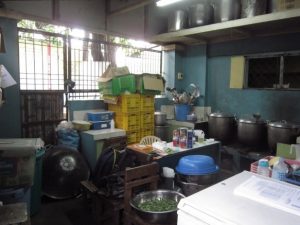
The kitchen in Bagong Silangan
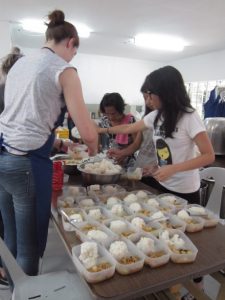
Packing the boxes in Cainta

20161102-corinna-5

Included in our first instructions was a presentation by Abby Favis about disaster management in the philippines. She points out that many people in endangered areas are not aware of the safety measures and do not have a foresight on possible future disasters. To improve the situation people in power have to separate the three factors hazard, exposure and vulnerability to minimize the risk for humans and their possessions.
Additionally the Office of Pathways to Better Education tries to balance the lack of confidence, financial problems and lack of academic preparation of students in public schools, where the learning conditions are often not acceptable to educate appropriate. Maybe we will have the chance to join some of their weekend activities during our stay.
In our fourth week we worked in the Ateneo Institute of Sustainability, where we made campus microclimate profiling. To create a map, we had two routes on campus, one which includes traffic and open fields and one in a forest on campus. On these routes we had several stops – every two hours at the same time at the same place – where we measured indicators like current wind speed, air temperature, relative humidity, barometric pressure and heat stress index. On the basis of this results, Abby constructed charts of their development during the day.

On the campus while gathering data for the microclimate profile
With Gladys, Irene and James from the Manila Observatory in Cubao

Based on cultural differences, there are different rules and norms to obey. For example is the patriotism way more distinct than in Germany, so that you have to stop and just wait when the national hymn is played in the mornings. Of course there are other behaviors you have to follow, just as avoiding conflicts whenever you can and using a mediator instead of facing the other person, or respect the very religious attitude of the inhabitants. Moreover some gestures are rather typical for the Philippines, for instance the mano to show your respect for authorities like priests or older people.
In general we really enjoyed our first weeks in the capital of the Philippines. So far we received so many impressions by living here, trying to experience the culture, talking to people and working in these new surroundings that we are looking forward to explore the multifaceted country not only in a tourist way but also through the view of locals.

Monatsbericht Oktober von Laura

Arrival, first impressions, orientation of daily things

After a long journey we arrived here at the Fatima Centre on October the first. The Fatima Centre is a foundation for human development and integrates a  farm school. Here we stay only in October. After that we go to Naga and work there in a school too. When we arrived at the Fatima everybody wanted to help us. The children showed us our rooms and brought our luggage there.  Everybody was very helpful and cordial. After a little rest we asked them to show us the area of the Fatima Centre. My impression was that they were happy with this. So we go around with approximately ten children and see the different places like the school and the farm. We see lots of plants which we haven’t in Germany like bananas or pomelos. The children wanted to share a pomelo with us. It was just a small one but everybody gets a little piece of it. In the following weeks I see the same again and again. It doesn’t matter how small a fruit or something else is, the things are shared with the others. In my opinion in Germany everybody wants the biggest piece and don’t care about the others. So my impression is that the people here are not that selfish like in Germany.

Another different point to Germany is the food here in the Philippines. The people eat to every meal rice normally with cooked meat. Mostly after the meal we eat here different fruits. The fruits are very delicious. For example the bananas. They are very sweet here and I haven’t known that so many different kinds of bananas exist. And also I haven’t known that you can cook with them. My impression is everywhere we put in potatoes the Philippinos use bananas. I think it is a very special taste. At breakfast here they often eat scrambled eggs, smoked fish, roast sausage and fish. I mean it is very solid. When we have here in the Philippines some bread, it is toast bread only. This is very sweet. Also cake is sweeter than in Germany. In this point you can see the influence of the American colonial times.

In kitchen are often ants. All the food is in receptacles. No insects can touch the food but for me it isn’t normal that insects are in the kitchen.

Here in the Philippines they pay with Philippino pesso. One Euro is nearly 50 pesso. The first days when we make little trips I always had not enough money by me side because it was hard to think 50 or 100 isn’t a lot of money. In Germany I would never take 100€ when I go to the supermarket only because I need toilet paper and a cleaning agent for the bathroom. But with the time I get used to the other currency. The most things here are cheaper than in Germany for example food, clothes or eating in a fast food restaurant. We bought some cocoa powder (Milo) for the Fatima Centre. This is one thing which is expensive (one kilo cost around 5€) because they have no or only less (very expensive) cow’s milk  here in the Philippines. If the people want to drink milk they normally use milk powder.

The climate here in the Philippines is different. There it has around 25°C and a high humidity of the air. The first days I was sweating the whole time. I think now after one month I’m dealing a bit better with this but I’m still sweating more than in Germany. It rains nearly every day because till November here is the rain period. The rain doesn’t cold the earth that much as in Germany. Sometimes the plenty rain results in power failure.

For washing our clothes the rain is a problem. We can’t hang up them outside and inside there isn’t that much space and because of the high humidity the clothes are not that dry as we are used from Germany but this is OK.

Washing is in general different then in Germany because we have no washing machine. We have to do it by our hands. The children show us how to do it right and which soap is the best. It takes a long time to clean your clothes by hand because first of all you have to clean all with clean water, after that you have to soap und brush every piece extra and at last all pieces again with water. In the end you have to spin the laundry like in a washing machine. The machine does all the same steps and also needs around two hours but I haven’t recognised it because in the mid time you do something else. And another different is that the washing machine in Germany uses warm water and here we normally wash with cold water.

Taking a shower here is different too. You have bucket with cold water then you use a creator take water and put it all over your skin. After a few days it was normal for me taking a shower in this way. To use cold water isn’t a problem because it is always warm outside and in the morning I’m awake after the shower.

We had the luck that we have a toilet with flash. It is typical that the toilet has no flash. In this case you put water im the toilet instead. Philippinos don’t use toilet paper. They clean with water. Luckily you can buy toilet paper so we use it.  Sometimes there is no toilet only a whole in the ground. This I seen one time when we stayed at a resort.

Everywhere we go the people look at us. The most time I can ignore it but sometimes it is a bit annoying because in my opinion we are all people. The only different is our skin colour. Some people ask where we are from and what we are doing here in the Philippines. I like this way of acting because German people normally won’t do it and we recognise the staring anyway.

The traffic here in the Philippines is slower than in Germany. Most of the people drive with Tricycles. A Tricycle is a motorcycle with assessor. My impression is that here no traffic rules or most of the people ignore the rules. For example only a few people stop at a zebra crossing. In Germany nearly everybody would do it.

We had a special experience when we wanted to buy a normal shower gel. It wasn’t easy to find one. The most shower gels are whitening ones. In Germany everybody wants to get a browner skin and here it is the other way round.

The first month passed off really fast and I enjoyed it.

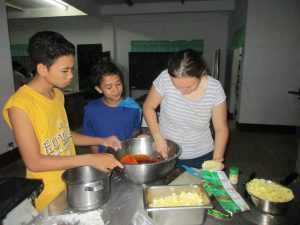
Preparation for pizza
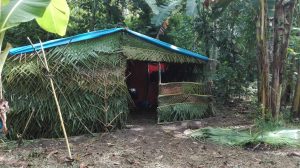
Selfmade tent
Selfmade tent
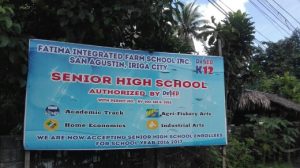
Information of the Fatima Center
Physical education outfit
Breakfast
Breakfast
Grade 4
Grade 4
During a lesson
During a lesson

Monatsbericht Oktober von Paulina

By doing my trip to the Philippines I am able to experience the people and their daily life, their culture, their behaviour and their religion.

Upon my arrival I noticed that the way I get treated by strangers is very different than in Germany. One reason for that may be my look: my blonde hair, my height and my white skin. When I am walking through the streets everybody is staring at me. I was asking myself what is separating me from them? It might be my wealth. The average BIP per person here is under 3000. And most people are even more poor, since there is a large inequality of wealth in the Philippines. You can see this in the streets.

For Example, there are many fast food restaurants here but many can’t afford the prices even if it is still cheaper than in Germany. One meal there cost around 200 pesos (is equal to 4 euro). But when you walk to the next corner, you can find the eateries where you can buy a full meal for about 30 pesos.

There is also a big difference in the homes here, most of the people live in very simple little houses while others live in big houses or villas side by side.

20161102-paulina-1

Another point that is showing the inequality of wealth is the way of transport. You can see a few cars in the streets, but the majority of the population cannot afford it. So most of them take a so called tricycle where one ride costs only 10 pesos per person.

20161102-paulina-2 20161102-paulina-3

As you can see there are lots of reasons why I am so different here and even after four weeks I feel of course very welcomed but strange. But in the end, if you think about it, we are all just humans, no matter how we look like, how much money we have or what we believe in.

You can also discover a big contrast in food from the beginning. The essential ingredient here is definitely rice. Rice is a side dish for every meal, no matter if it is breakfast, lunch or even dinner. The Filipinos prefer rice over every other side dish like noodles or potatoes. Even fast food restaurants serve rice instead of fries. You eat it here in combination with fish and meat and a lot of things are fried here. So you can say that the food here is unhealthier than in Germany, they do not eat salad and they do not even have any salted bread. The bread in the bakeries is normally sweet as everything here.

20161102-paulina-4 20161102-paulina-5 20161102-paulina-6

Of course also the climate is very different. It is not just hot here but also is the air very wet. This causes a feeling as if you are in a sauna and you have to sweat all the time. Because of that most of the people are moving and working very slowly. So the climate is the reason why things take longer and people are not that productive. This may also be the reason why Filipinos are normally arriving later. You have to add half an hour or more to the time you have told them till they arrive, this is called the “Filipino time”.

20161102-paulina-7

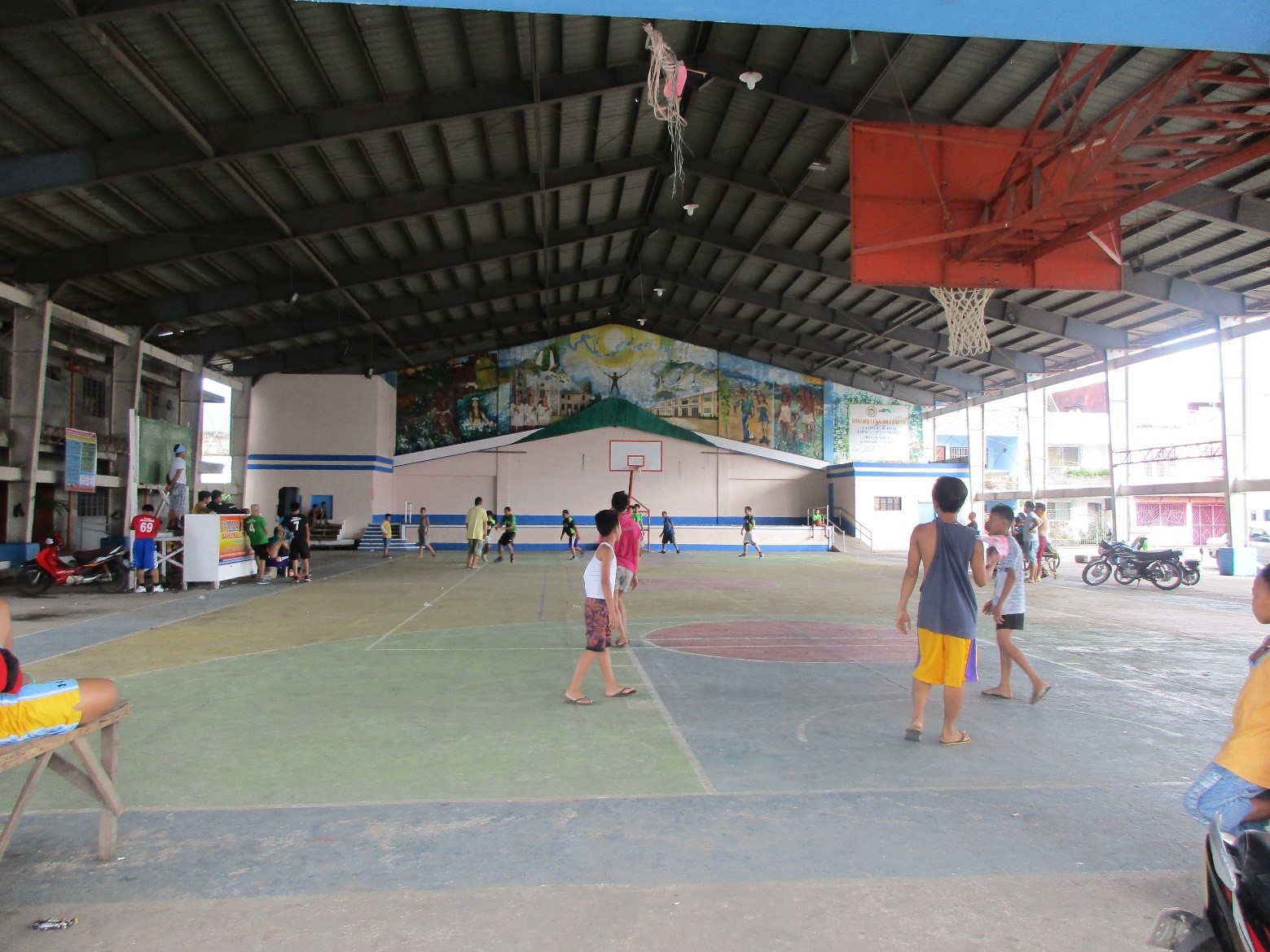
Even if the weather is incredible hot, the Filipinos are very sporty. Because of the American influence in the past they play a lot of basketball here. Sports like handball or soccer are not common here. But imagine that: Basketball is that kind of sport you need very tall people for. But the Filipino population is very small, so their play style is completely different.

20161102-paulina-8

The people here sometimes have nothing more but the necessary things they need. But they are just grateful for what they have, for their family and friends, for a roof over their head and something to eat. They are happy and enjoy their life as much as possible. That is what impressed me the most and is also a lesson I learned here in this short time: Do not take things for granted and no matter how hard life can get, just go to bed and be grateful for all the things you have.

20161102-paulina-9 20161102-paulina-10 20161102-paulina-11